
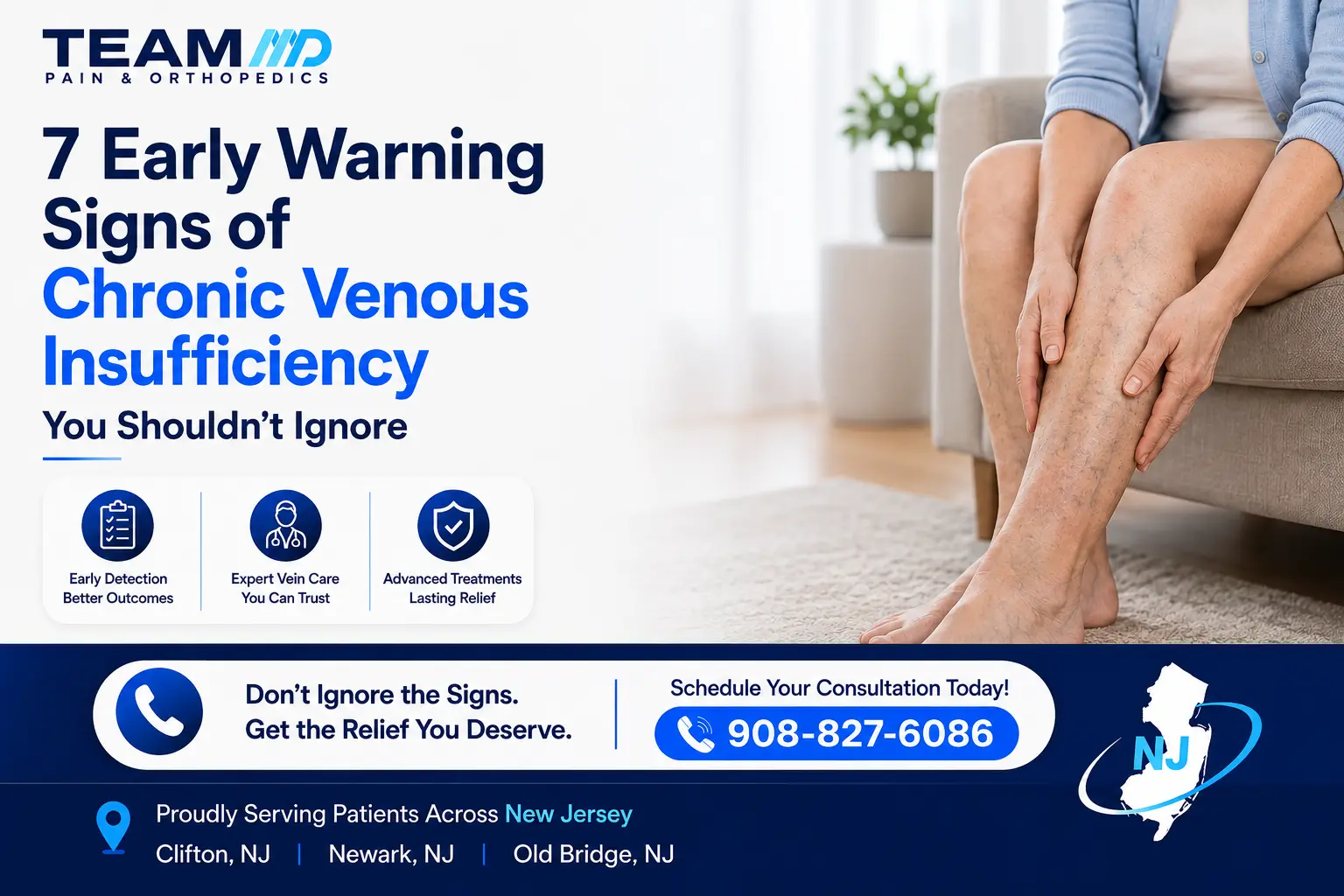
Chronic venous insufficiency (CVI) develops slowly, which is exactly why most people miss it until the condition has already progressed. It happens when the valves inside your leg veins weaken or become damaged, making it harder for blood to travel back up to the heart. Left unchecked, it can lead to painful, harder-to-treat complications later on.
If you’re already noticing heaviness, swelling, or visible veins, the earlier you connect with a vein specialist near you, the simpler and less invasive your treatment options stay. Here are the seven signs to watch for.
1. Leg Heaviness or Fatigue
One of the earliest signs of CVI is a dragging, tired feeling in the legs, especially after standing or sitting for long stretches. It’s easy to blame this on a long day, but if it happens consistently, it’s worth paying attention to.
2. Swelling in the Ankles or Lower Legs
Mild swelling that builds through the day and eases overnight is a classic early indicator that blood isn’t circulating the way it should.
3. Aching or Cramping
A dull ache, or cramps that show up at night, often appears before any visible changes to the skin do. This is one of the more overlooked early signs because it doesn’t look like anything is wrong.
4. Visible Varicose Veins
Varicose veins are frequently the first visible clue that a vein’s valves are struggling to keep blood moving in the right direction.
5. Itchy or Irritated Skin
Poor circulation can leave the skin over affected veins itchy, dry, or irritated — often mistaken for a skin condition rather than a circulation problem.
6. Skin Discoloration
As CVI progresses, the skin near the ankles can take on a brownish or reddish tint from blood pooling underneath it.
7. Slow-Healing Sores or Ulcers
In more advanced stages, poor circulation can break down the skin and lead to wounds near the ankles that heal slowly, if at all. This is a sign that needs prompt medical attention rather than a wait-and-see approach.
Why Early Treatment Matters
CVI doesn’t reverse on its own, and it tends to worsen without some form of intervention. Catching it early — while symptoms are still just heaviness or mild swelling — usually means treatment is less invasive and recovery is faster. Waiting until skin changes or ulcers show up means a longer, more complex path back to healthy circulation.
How TeamMD Treats CVI
TeamMD’s Chronic Venous Insufficiency (CVI) Management program pairs advanced diagnostic imaging with minimally invasive treatments to address the underlying cause, not just the visible symptoms. Depending on what your evaluation shows, that might include:
- Radiofrequency vein ablation — uses heat energy to close off the damaged vein so blood reroutes through healthy ones.
- Endovenous vein ablation — a laser-based procedure that seals the affected vein with minimal downtime.
- Compression therapy and sclerotherapy — non-surgical options often used for milder or earlier-stage CVI.
Medically Reviewed By
Dr. Arun Kandra, MD, board-certified physician specializing in anesthesiology and pain management at TeamMD. Dr. Kandra takes a personalized, holistic approach to vein and pain care, tailoring each treatment plan to the patient’s specific condition and lifestyle rather than applying a one-size-fits-all protocol. Learn more about our specialists.
Frequently Asked Questions
What causes chronic venous insufficiency?
Common contributors include deep vein thrombosis, varicose veins, obesity, pregnancy, prolonged standing or sitting, and the natural weakening of vein walls with age.
How is CVI diagnosed?
A vein specialist typically examines the legs and uses ultrasound imaging to check blood flow and valve function, then recommends a treatment plan based on the severity of the findings.
Can CVI be treated without surgery?
Yes. Most patients start with non-surgical or minimally invasive options like compression therapy, sclerotherapy, or radiofrequency ablation before anything more involved is considered.
Is chronic venous insufficiency serious?
It’s not usually an emergency, but it doesn’t improve on its own. Left untreated, blood pooling in the legs can progress to skin damage and ulcers, so timely evaluation matters.
Ready to Get Checked?
If any of these seven signs sound familiar, don’t wait for them to get worse. Book an appointment with a TeamMD vein treatment specialist for a full evaluation.