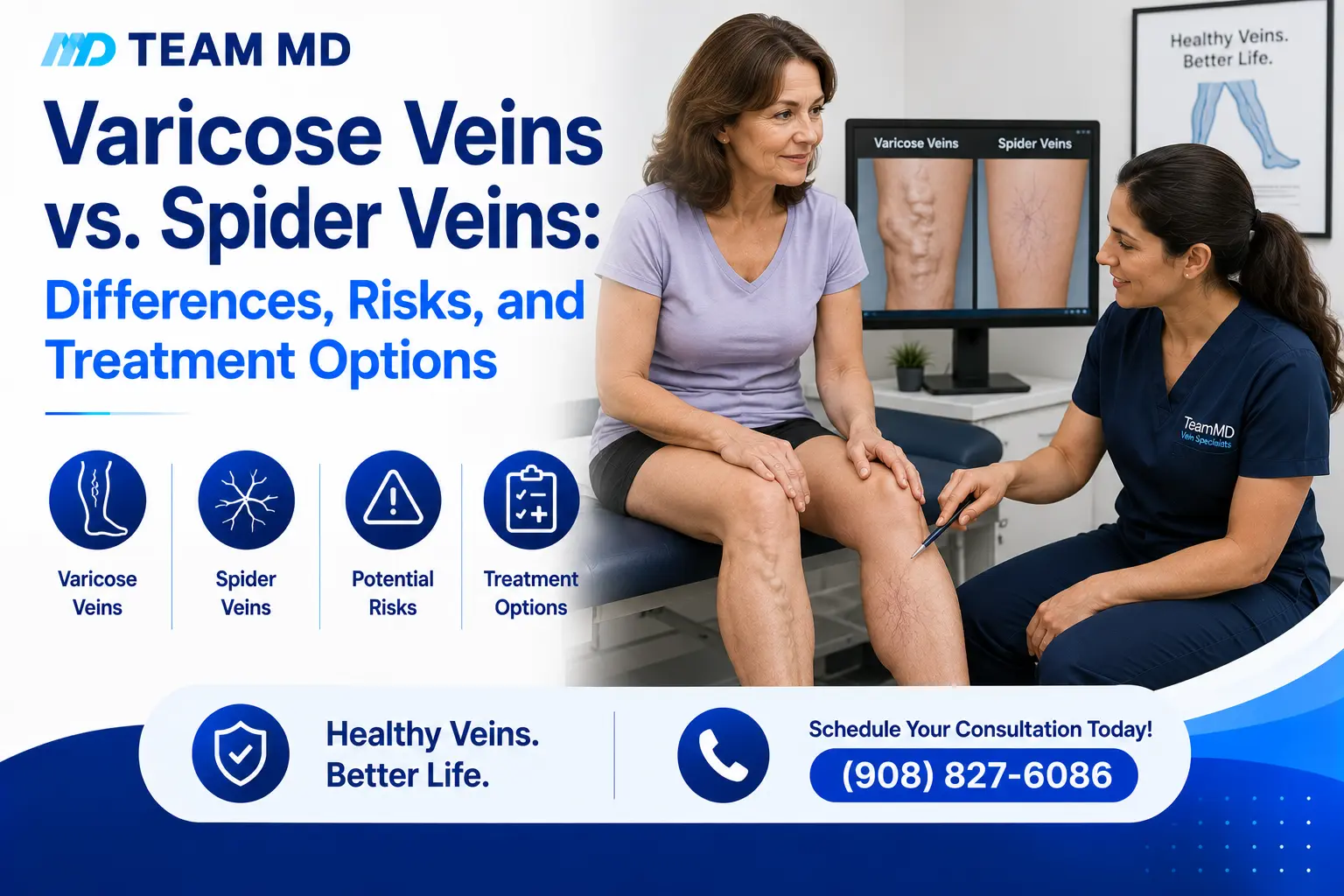
If you’ve noticed bulging, twisted veins or thin web-like lines on your legs, you’re dealing with one of two common vein conditions: varicose veins or spider veins. They’re related, but they’re not the same — and understanding the difference matters for both your appearance and your vascular health.
What Are Varicose Veins?
Varicose veins are enlarged, twisted veins that often appear raised and bulging beneath the skin, usually on the legs. They develop when the one-way valves inside veins weaken, allowing blood to pool instead of flowing efficiently back to the heart.
Common symptoms:
- Bulging, rope-like veins, often blue or dark purple
- Aching, heaviness, or throbbing in the legs
- Swelling around the ankles by end of day
- Itching or skin irritation near the affected vein
What Are Spider Veins?
Spider veins are smaller, closer to the skin’s surface, and form a web or branch-like pattern in red, blue, or purple. They’re typically a cosmetic concern rather than a medical one, though they can sometimes signal the same underlying valve issues as varicose veins.
Common symptoms:
- Thin, thread-like red or blue lines
- Usually painless
- Common on the legs and face
The Real Difference: Size, Depth, and Risk
Varicose veins are larger, sit deeper under the skin, and are directly tied to vein valve dysfunction — which means they can worsen over time and contribute to more serious circulation problems if left untreated, including chronic venous insufficiency. Spider veins are more superficial and generally don’t carry the same medical risk, though many patients treat both for comfort and appearance.
Treatment Options
The good news: both conditions are highly treatable with minimally invasive procedures that require little to no downtime. Depending on the size, depth, and severity of the affected veins, treatment may include:
- Radiofrequency Vein Ablation (RFA) — uses heat energy to close off diseased veins
- Endovenous Vein Ablation — a laser-based option for larger varicose veins
- Varithena — an injectable foam treatment for varicose veins that don’t require surgery
When to See a Vein Specialist
If your veins are causing pain, swelling, or skin changes — not just cosmetic concerns — it’s worth getting evaluated rather than waiting. Left untreated, varicose veins can progress and contribute to more serious circulation issues.
TeamMD’s vein treatment specialists offer advanced diagnostic imaging and personalized treatment plans for both varicose and spider veins, using minimally invasive techniques designed for fast recovery and lasting results.
Ready for smoother, healthier legs? Book an appointment with TeamMD’s vein specialists today.