
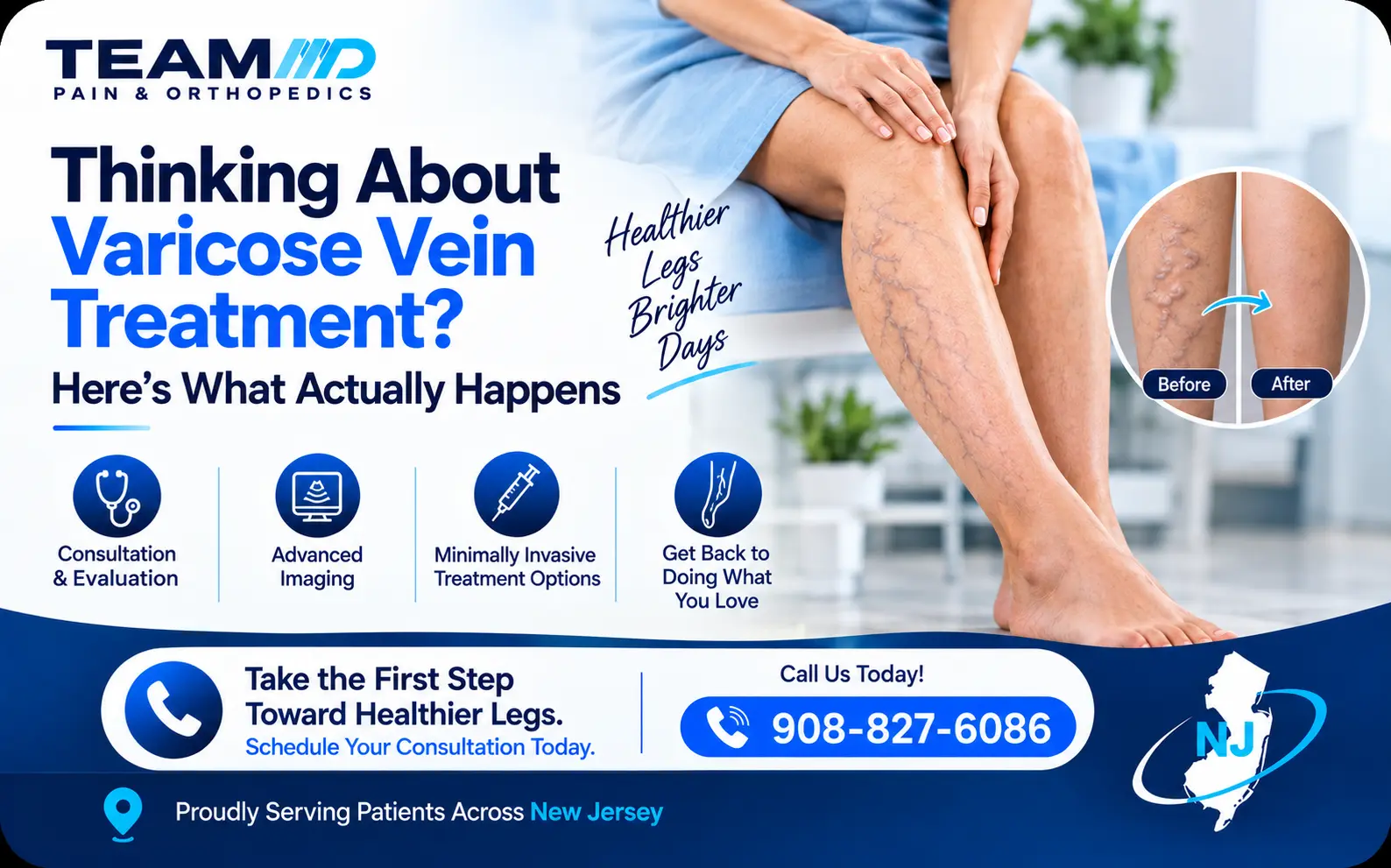
Wondering whether varicose vein treatment hurts? For most modern minimally invasive vein procedures, patients experience little discomfort. You may feel a brief pinch when local anesthesia is administered, followed by pressure, pulling, or mild sensations during the procedure. Significant pain is not what most patients expect from treatments such as radiofrequency ablation (RFA), endovenous laser ablation, or Varithena.
That is one of the most common questions patients ask before scheduling varicose vein treatments in NJ. It is also understandable. Many people still associate vein treatment with older surgical procedures that involved larger incisions, general anesthesia, and longer recovery periods.
Today’s minimally invasive treatments are different. Many procedures are performed in an outpatient setting using local anesthesia, allowing you to remain awake and return home the same day.
Does Varicose Vein Treatment Hurt?
Usually, varicose vein treatment causes minimal discomfort rather than significant pain.
Before treatment begins, the area is numbed with local anesthesia. You may feel a quick pinch or brief stinging sensation from the numbing injection. Once the area is numb, patients commonly describe the rest of the procedure as pressure, movement, or mild sensations rather than sharp pain.
Your exact experience depends on the treatment being performed, the veins being treated, and your individual sensitivity. Your vein specialist will explain what you can expect before the procedure begins.
What Does a Varicose Vein Procedure Feel Like?
Modern vein procedures are generally designed to treat the problem vein without the larger incisions associated with traditional vein stripping.
For treatments such as radiofrequency ablation and endovenous laser ablation, a thin catheter is inserted into the affected vein through a small access point. Ultrasound guidance allows the vein specialist to visualize the vein during treatment.
Local anesthesia is used around the treatment area to improve comfort. After the area is numb, you may notice pressure or other mild sensations as the catheter is positioned and the vein is treated.
The experience varies from person to person, but the procedure is generally much less invasive than traditional surgical vein stripping.
Which Varicose Vein Treatment Is Right for You?
There is no single treatment that is appropriate for every varicose vein patient. The best approach depends on the location, size, shape, and underlying cause of the affected veins.
Radiofrequency Ablation (RFA)
Radiofrequency ablation uses controlled radiofrequency energy to heat and close an unhealthy vein. Blood can then reroute through healthier veins.
RFA is minimally invasive and is commonly performed using ultrasound guidance and local anesthesia. Your vein specialist will determine whether it is appropriate based on your vein anatomy and ultrasound findings.
Endovenous Laser Ablation
Endovenous laser ablation uses laser energy to close an affected vein from inside. Like RFA, it is performed through a small access point rather than through a large surgical incision.
Patients generally remain awake during the procedure, and local anesthesia is used to improve comfort.
Varithena
Some veins may be too twisted, winding, or otherwise unsuitable for catheter-based treatment. In selected cases, Varithena, an FDA-approved injectable foam treatment, may be considered.
Varithena works differently from RFA and laser ablation, but the goal is similar: treating an unhealthy vein so blood can redirect through healthier veins.
Why Ultrasound Matters
A duplex ultrasound is an important part of evaluating many patients with varicose veins. It allows the vein specialist to examine blood flow and identify the veins contributing to the problem.
Rather than choosing a treatment based only on how a vein looks on the surface, your treatment plan can be based on your symptoms, medical history, physical examination, and ultrasound findings.
What Happens After Varicose Vein Treatment?
Some patients experience mild soreness, bruising, tenderness, or a tight sensation along the treated vein after the procedure. These effects are generally temporary, but recovery varies depending on the treatment and the individual.
Your provider will give you specific instructions about activity, compression stockings, medications, and follow-up care.
Many minimally invasive vein procedures allow patients to resume normal daily activities relatively quickly. However, your return to work, exercise, or other activities should follow the recommendations provided by our vein specialist.
Why Should You Treat Varicose Veins?
Varicose veins are not always simply a cosmetic concern. They can be associated with chronic venous insufficiency, a condition in which the veins have difficulty returning blood efficiently toward the heart.
Some people with venous disease experience:
- Aching or discomfort in the legs
- Leg heaviness or fatigue
- Swelling around the ankles or legs
- Itching or skin irritation
- Visible, enlarged veins
- Skin changes around the lower legs
Not everyone with varicose veins needs treatment. However, persistent symptoms or changes in the skin should be evaluated by a qualified healthcare professional.
Getting evaluated can help determine whether your symptoms are related to venous disease and whether treatment is appropriate.
When Should You See a Vein Specialist?
Consider scheduling a vein evaluation if you have persistent leg pain, heaviness, swelling, aching, or prominent varicose veins, particularly when symptoms interfere with your daily activities.
A vein specialist can evaluate your symptoms and determine whether additional testing, such as a duplex ultrasound, is appropriate.
If you are searching for varicose vein treatments near me in New Jersey, look for a practice that can evaluate the underlying vein problem rather than focusing only on the appearance of visible veins.
Frequently Asked Questions About Varicose Vein Treatment
Does varicose vein treatment hurt?
Most patients experience minimal discomfort during minimally invasive vein procedures. A brief pinch or sting may occur when local anesthesia is administered. After the area is numb, you may mainly feel pressure or other mild sensations. Some soreness or bruising can occur afterward.
Will I need general anesthesia?
Many minimally invasive treatments, including RFA, endovenous laser ablation, and Varithena, can be performed using local anesthesia in an outpatient setting. Your provider will determine the appropriate approach for your specific procedure.
How long does varicose vein treatment take?
The procedure time varies depending on the treatment and number of veins being treated. Many minimally invasive procedures can be completed during an outpatient appointment, without an overnight hospital stay.
How soon can I return to normal activities?
Recovery varies by procedure and patient. Many people can walk and resume routine activities shortly after treatment, while strenuous exercise may need to be limited for a period of time. Your vein specialist will provide individualized post-treatment instructions.
What causes varicose veins?
Varicose veins commonly develop when valves inside the veins do not function properly. This can allow blood to pool in the veins, causing them to enlarge and become more visible.
Risk factors can include family history, increasing age, pregnancy, prolonged standing, and other factors that affect circulation.
Can varicose veins get worse without treatment?
Varicose veins can progress over time, particularly when underlying venous insufficiency is present. Some people may eventually develop increased swelling, skin changes, or other complications. An evaluation can help determine the severity of the condition and whether treatment is appropriate.
Is varicose vein treatment covered by insurance?
Insurance coverage depends on your individual plan, the treatment being considered, and whether the procedure meets your insurer’s criteria for medical necessity. Symptoms and documented venous disease may be relevant to coverage. TeamMD can help you understand the insurance verification process before treatment.
When should I see a vein specialist?
If you have persistent leg heaviness, aching, swelling, discomfort, or prominent varicose veins, consider scheduling an evaluation. A vein specialist can assess your symptoms and determine whether venous disease is contributing to them.
Get a Varicose Vein Evaluation in New Jersey
If fear of pain has kept you from getting your varicose veins evaluated, learning what modern treatment actually involves may make the process feel much more manageable.
TeamMD provides minimally invasive vein care in New Jersey, including evaluation and treatment options for varicose veins and chronic venous insufficiency. Your treatment plan can be based on your symptoms, examination, and diagnostic findings rather than a one-size-fits-all approach.
If you are experiencing leg heaviness, swelling, aching, or visible varicose veins, schedule a vein evaluation with TeamMD to discuss your options and learn what treatment may be appropriate for you.