
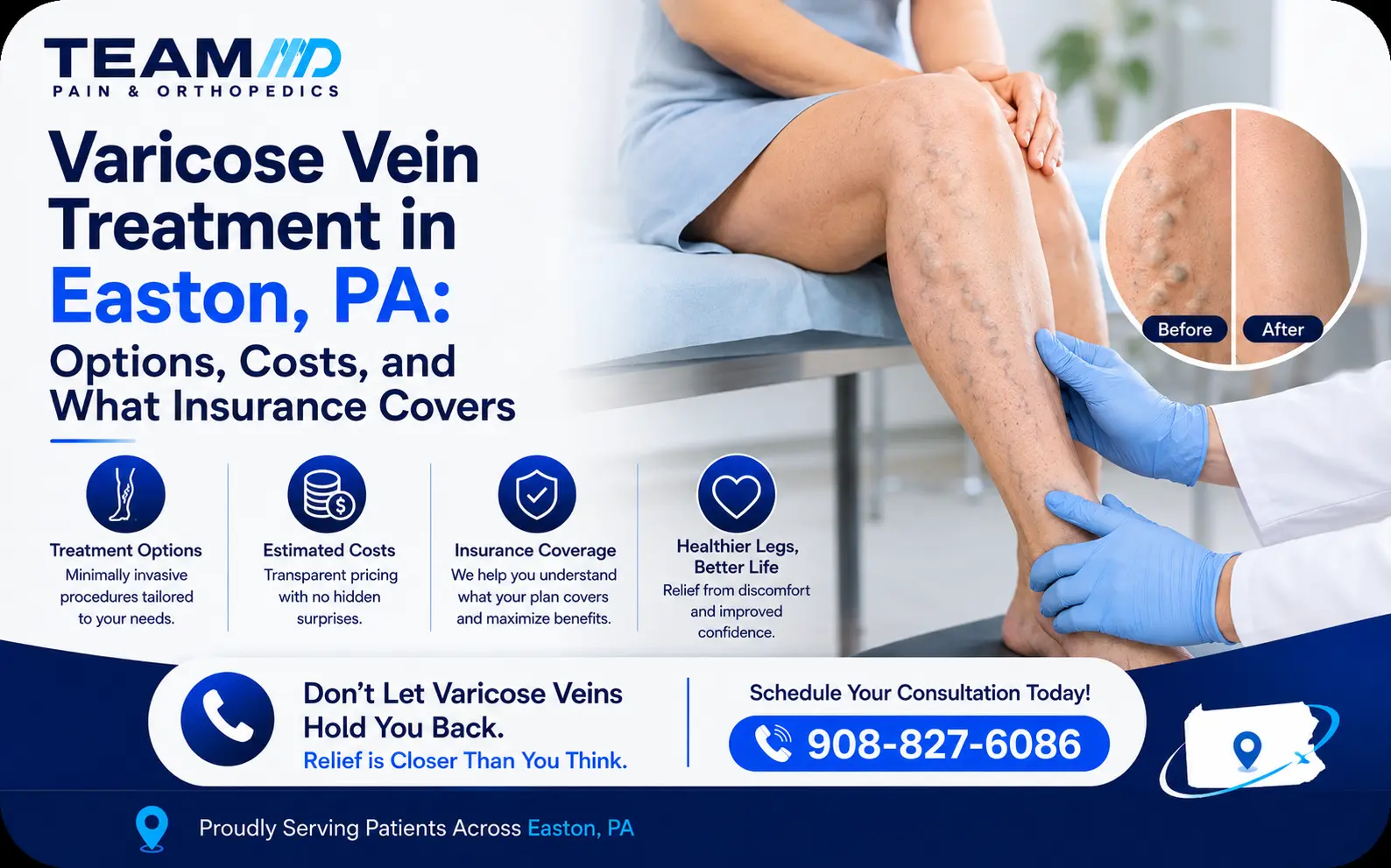
If you’re tired of achy, bulging varicose veins and you’ve been searching for a reliable Vein Treatment doctor in Easton, PA, you’re in good company — this is one of the most common vein conditions we see, and the good news is that you don’t have to live with it. Today’s vein treatments are minimally invasive, quick, and far more accessible through insurance than most patients realize.
Let’s walk through what your options actually look like, what tends to drive cost up or down, and how insurance coverage works — so you can go into your first visit already knowing what to expect.
What Vein Conditions Are We Actually Talking About?
Varicose veins and spider veins are more common than people think, and they don’t happen because of anything you did “wrong.” They show up when the tiny valves inside your veins start to weaken, letting blood pool instead of flowing back up toward your heart the way it should. That pooling is what causes veins to bulge, twist, and become visible under the skin — along with that heavy, achy, tired-legs feeling that tends to get worse the longer you’re on your feet.
If you’ve been putting off calling a Vein Treatment doctor near me because you figured it was “just cosmetic,” it’s worth getting checked out. Left alone, vein disease can progress and eventually lead to skin changes or even ulcers — but caught early, it’s very treatable.
Common Varicose Vein Treatment Options
Treatment isn’t one-size-fits-all. It depends on the size, depth, and location of the veins involved. Here’s what’s typically on the table:
- Radiofrequency Vein Ablation (RFA) — Heat energy is used to seal off the problem vein from the inside, so blood naturally reroutes to healthier veins nearby. It’s done right in the office with local anesthesia, and most people are back to their day the same afternoon.
- Endovenous Laser Ablation — A similar concept to RFA, but using laser energy instead of radiofrequency. It’s often the go-to for larger or more stubborn varicose veins.
- Varithena (Injectable Foam) — No incisions needed. A foam solution is injected directly into the vein, causing it to collapse and gradually get reabsorbed by the body — a good option for veins that are harder to reach with a catheter.
If your varicose veins are part of a bigger circulation picture, your treatment plan might also include ongoing Chronic Venous Insufficiency management to address the underlying valve issue, not just the visible veins.
What Actually Affects the Cost?
A few things move the needle on price:
- How many veins need treatment, and how large they are
- Which procedure fits your case — RFA, laser, or foam
- Whether treatment is medically necessary or purely cosmetic
- How many sessions it takes to get the result you want
There’s no single “sticker price” here — it really comes down to your specific veins and symptoms, which is why a proper evaluation matters more than any online estimate.
Does Insurance Cover Varicose Vein Treatment?
In a lot of cases, yes. If your varicose veins are causing real symptoms — pain, swelling, skin discoloration, or a diagnosed issue like chronic venous insufficiency — insurers typically treat it as medically necessary rather than cosmetic, and most PPO plans will help cover it. Treatment for veins that aren’t causing symptoms is more likely to be classified as cosmetic and paid out of pocket.
TeamMD accepts most major PPO plans, including Aetna, United Healthcare, Cigna, Blue Cross Blue Shield, GHI, and The Empire Plan — and we offer free insurance verification before you commit to anything, so there are no surprises.
FAQs
What is the fastest way to get rid of varicose veins?
Minimally invasive procedures like RFA, laser ablation, or Varithena foam are the quickest routes to real results — most take under an hour and let you resume normal activity within a day or two. Compression stockings and lifestyle changes help manage symptoms, but they won’t make existing varicose veins disappear.
How much does varicose vein treatment cost without insurance?
Cost varies widely based on the number of veins, the procedure used, and how many sessions are needed — which is exactly why a personalized evaluation (and a free insurance check) matters more than any general price range you’ll find online.
Do varicose veins come back after treatment?
The treated vein itself is closed for good, but new varicose veins can develop over time in other spots, especially if risk factors like prolonged standing or family history are still in play. Regular follow-up helps catch anything new early.
What happens if varicose veins are left untreated?
They tend to get worse gradually — more swelling, skin changes, and in some cases, painful ulcers or blood clots. Treating them early usually means a simpler procedure and an easier recovery.
What kind of doctor should I see for varicose veins?
Vein specialists, vascular surgeons, and phlebologists all treat varicose veins, and many primary care doctors can refer you to the right one. What matters most is finding a provider who does a real diagnostic evaluation, not just a visual check.
Is vein treatment painful?
Most patients describe it as mild discomfort at most — procedures use local anesthesia, and there’s no general anesthesia or hospital stay involved for the vast majority of cases.
Vein Treatment at TeamMD Easton
Our Easton, PA office, located at 3735 Nazareth Rd #203, treats the full spectrum of vein conditions alongside pain management, orthopedic, and podiatry care — so if something else is going on with your legs or joints, we can likely help with that too. Every treatment plan starts with a real vein evaluation using diagnostic imaging, because your legs — and your veins — aren’t the same as anyone else’s, and a template treatment plan won’t get you the best result.
Reviewed by Dr. Arun Kandra, MD, board-certified in anesthesiology and pain management at TeamMD. Dr. Kandra and the TeamMD clinical team bring decades of combined experience in vein care and pain management, with a focus on personalized, minimally invasive treatment plans tailored to each patient.
Ready to Stop Living With Achy, Bulging Veins?
You don’t have to keep adjusting your routine around leg pain and heaviness. Book a consultation with TeamMD’s Easton vein specialists today — bring your insurance card, and we’ll verify your coverage before you commit to anything, so you know exactly what to expect from day one.