
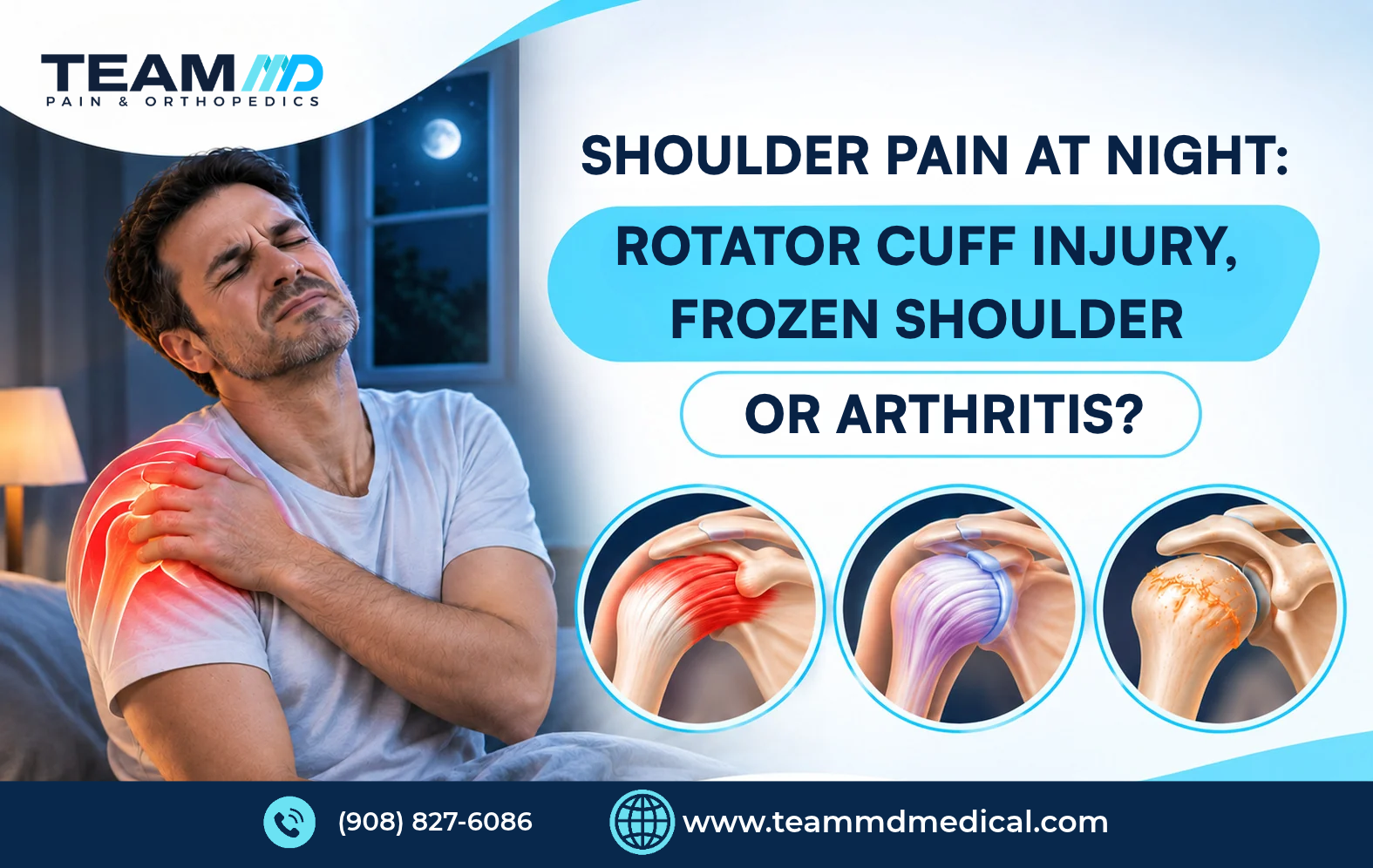
Shoulder pain that keeps you awake can make everyday activities feel harder the following day. Whether you’re lying on your side, adjusting your pillow, or trying to find a comfortable position, persistent discomfort can disrupt your sleep. If you’re experiencing shoulder pain at night in Clifton, NJ, the underlying cause may be a rotator cuff injury, frozen shoulder, or shoulder arthritis. Although these conditions share several symptoms, differences in pain, stiffness, muscle strength, and shoulder movement can help doctors identify the cause and recommend suitable treatment.
Why Does Shoulder Pain Get Worse at Night?

Shoulder discomfort often becomes noticeable at bedtime because certain sleeping positions put pressure on sensitive muscles, tendons, and joints. Inflammation, joint stiffness, and limited movement can also contribute to nighttime pain.
How Sleeping Positions Put Pressure on Your Shoulder
Sleeping directly on an injured shoulder places pressure on the surrounding tendons, muscles, and soft tissues. This added pressure can aggravate conditions such as rotator cuff injuries, bursitis, and shoulder arthritis. People who experience shoulder pain when lying on their side may wake repeatedly or struggle to settle into a comfortable position. Even sleeping on the unaffected side can cause discomfort if the painful arm lacks proper support.
Inflammation, Stiffness, and Reduced Movement
Inflamed shoulder tissues can remain sensitive even when your arm is resting. Staying in one position for an extended period may also increase stiffness, making movement uncomfortable when you turn over or adjust your arm. This explains why shoulder pain sometimes continues despite changing pillows or sleeping positions. When discomfort persists, a professional assessment can help identify its source. Exploring available shoulder pain treatment services can also help patients understand their options for managing symptoms.
Rotator Cuff Injuries: A Common Cause of Nighttime Shoulder Pain
The shoulder joint is stabilized, and arm movements are regulated by the rotator cuff, which is composed of four muscles and tendons. Repetitive overhead activities, sports injuries, falls, and age-related tendon changes can damage these structures. As a result, patients may experience pain, weakness, and difficulty performing everyday movements.
Signs of Rotator Cuff Pain at Night
Rotator cuff injuries commonly cause a deep, aching sensation around the outer shoulder. Pain often becomes noticeable when lying directly on the affected side and may interrupt sleep. Other symptoms include weakness when lifting objects, discomfort when raising the arm overhead, and difficulty reaching behind the back. It might also be uncomfortable to dress or reach inside a cabinet. For persistent symptoms, rotator cuff injury treatment in Clifton, NJ may include rehabilitation, modifying activities, or further diagnostic evaluation, depending on the severity of the injury.
Rotator Cuff Tendinitis vs. Rotator Cuff Tears
Rotator cuff tendinitis occurs when the tendons become irritated, while a rotator cuff tear involves partial or complete damage to tendon fibers. Both conditions can cause nighttime discomfort and painful shoulder movement. However, larger tendon tears may result in noticeable weakness, particularly when raising or rotating the arm. Patients experiencing activity-related shoulder injuries can explore sports medicine care in Clifton for injury assessment, rehabilitation, and appropriate treatment recommendations.
Frozen Shoulder: When Pain and Stiffness Affect Your Sleep

Frozen shoulder, sometimes called adhesive capsulitis, occurs when the tissue surrounding the shoulder joint becomes irritated and stiff. Unlike many rotator cuff injuries, frozen shoulder limits movement even when another person gently assists your arm. Symptoms typically develop gradually, with nighttime aching often becoming particularly troublesome.
Early Warning Signs of Frozen Shoulder
Frozen shoulder often begins with persistent aching, increasing stiffness, and difficulty with movements that once felt easy. Reaching behind your back, lifting your arm, or putting on a jacket may become increasingly difficult. Pain can continue regardless of your sleeping position, making uninterrupted rest challenging. An orthopedic specialist in Clifton can examine your shoulder movement and determine whether restricted joint mobility or tendon-related weakness is contributing to your symptoms.
The Three Stages of Frozen Shoulder
Frozen shoulder generally develops in three stages, although symptoms and recovery timelines vary by individual.
- Freezing stage: Shoulder pain increases as movement gradually becomes restricted.
- Frozen stage: Stiffness remains pronounced, although pain may begin to ease.
- Thawing stage: Shoulder flexibility and movement gradually improve.
Some patients experience symptoms for several months or longer. Appropriate rehabilitation, symptom management, and regular assessment can support recovery throughout these stages.
Who Is More Likely to Develop Frozen Shoulder?
Frozen shoulder is associated with certain medical conditions, particularly diabetes and thyroid disorders. Prolonged shoulder immobility following an injury or surgery may also increase the likelihood of developing the condition. Adults between approximately 40 and 60 years old are commonly affected, although frozen shoulder can occur outside this age group. An orthopedic doctor in Clifton may review your medical history, symptoms, and shoulder mobility to identify contributing factors and recommend an appropriate management plan.
Shoulder Arthritis: Can Joint Wear and Tear Cause Night Pain?
Shoulder arthritis affects the surfaces of the shoulder joint, often leading to pain, stiffness, and gradually restricted movement. As cartilage deteriorates or inflammation affects joint tissues, ordinary activities may become uncomfortable. Symptoms can be especially noticeable after prolonged rest or when changing sleeping positions at night.
Common Symptoms of Shoulder Arthritis
Shoulder arthritis commonly causes deep joint aching, stiffness, and reduced mobility. Discomfort may be particularly noticeable after waking in the morning or sitting without moving the arm for an extended period. Some patients also experience grinding, clicking, or popping sensations when moving their shoulders. If these symptoms regularly disturb sleep, an orthopedist in Clifton can evaluate whether arthritis or another shoulder condition is responsible. The most appropriate joint pain treatment depends on the diagnosis and severity of symptoms.
Osteoarthritis vs. Inflammatory Arthritis
Osteoarthritis is when the cartilage in a joint gradually deteriorates, which can also lead to changes in the underlying bone and restricted movement in the joint. Inflammatory arthritis, including rheumatoid arthritis, involves inflammation affecting the joint lining and surrounding structures. Doctors consider symptoms, medical history, physical examination findings, and imaging results to distinguish these conditions. Selected laboratory tests may also help identify inflammatory disorders. Patients with degenerative joint changes can learn about osteoarthritis pain management and treatment approaches that may help relieve discomfort and maintain mobility.
Rotator Cuff Injury vs. Frozen Shoulder vs. Arthritis: How Can You Tell the Difference?

Rotator cuff injuries, frozen shoulder, and arthritis can all cause persistent nighttime discomfort. However, each condition typically affects shoulder strength, flexibility, and movement differently. Recognizing these differences can help you explain your symptoms during a medical appointment. A professional examination remains necessary to identify the underlying problem accurately.
Comparing Symptoms, Shoulder Movement, and Imaging Findings
The table below highlights typical symptoms and examination findings for each condition.
These patterns provide useful diagnostic clues, but individual symptoms may overlap.
What Active vs. Passive Shoulder Movement Can Reveal
Active shoulder movement refers to moving your arm on your own. Passive movement occurs when a clinician gently moves your relaxed arm during an examination. Rotator cuff injuries may cause weakness or pain during active movement, while assisted movement remains relatively preserved. Frozen shoulder typically restricts both types of movement because the joint capsule becomes tight. Arthritis can also limit active and passive movement, often with accompanying stiffness and joint discomfort. A shoulder pain specialist in Clifton, NJ can evaluate these differences through a controlled physical examination.
Other Conditions That Can Cause Nighttime Shoulder Pain
Nighttime shoulder discomfort does not always originate from the shoulder joint. Conditions affecting nearby muscles, tendons, and nerves can produce similar symptoms. Shoulder bursitis, impingement, and cervical spine disorders are other possible causes. Neck pain accompanied by tingling, numbness, or discomfort traveling down the arm may indicate nerve involvement. One possible condition is cervical radiculopathy, which happens when a nerve root in the neck is inflamed or compressed. Identifying the source of pain helps doctors select treatment suited to the affected area.
How to Sleep With Shoulder Pain: Practical Tips for Better Rest
Adjusting your sleeping position and supporting your painful arm may reduce pressure on sensitive shoulder structures. These simple measures can improve comfort temporarily. However, ongoing pain may require medical evaluation to address the underlying condition.
Best Sleeping Positions for Shoulder Pain
Certain sleeping positions can help reduce unnecessary strain on an uncomfortable shoulder.
- On your back: Place a small pillow beneath the affected elbow and forearm to support the arm.
- On your unaffected side: Hug a pillow to keep the painful shoulder comfortably supported.
- With back support: Position a cushion behind your body to avoid rolling onto the affected shoulder.
Choose a comfortable position, and avoid forcing your arm into an angle that increases discomfort during sleep.
Ice vs. Heat: Which Is Better for Nighttime Shoulder Pain?
Cold therapy may help ease discomfort associated with irritation or inflammation. When appropriate, apply an ice pack wrapped in a towel for approximately 15–20 minutes. Gentle heat may provide relief when muscle tightness and joint stiffness are the main concerns. The best approach depends on your symptoms, underlying condition, and medical recommendations. Avoid placing ice directly against your skin or falling asleep with a heating pad.
Gentle Movement and Evening Habits
Gentle shoulder movements recommended by a healthcare professional may help maintain flexibility without irritating painful tissues. Before bedtime, avoid heavy lifting, repeated overhead movements, and aggressive stretching. Exercising through significant pain can worsen symptoms rather than improve them. A structured physical therapy and rehabilitation program may help restore shoulder strength and mobility through exercises tailored to your condition.
When Should You See a Doctor for Shoulder Pain at Night?
Occasional shoulder discomfort may improve with rest and changes to everyday activities. However, pain that persists, increasing stiffness, or worsening weakness deserves professional attention. Identifying the cause can guide appropriate treatment and help limit further difficulties with shoulder movement.
Warning Signs That Require Medical Attention
Consider arranging a medical evaluation if you experience:
- Shoulder pain that repeatedly wakes you during the night.
- Increasing weakness or difficulty moving your arm.
- Persistent discomfort affecting work or everyday activities.
Seek urgent medical attention for severe pain following an injury, visible shoulder deformity, or a hot, swollen joint accompanied by fever.
Call 911 if shoulder discomfort occurs alongside chest pain, shortness of breath, sweating, or other possible heart attack symptoms.
How Doctors Diagnose the Cause of Shoulder Pain
An orthopedic doctor near you in Clifton may begin by reviewing your symptoms, medical history, shoulder strength, and areas of tenderness. The examination also includes assessing active and passive shoulder movement.
Depending on the findings, diagnostic imaging may include:
- X-rays: Help identify arthritis, bone spurs, and certain bone injuries.
- Ultrasound or MRI: Helps evaluate suspected rotator cuff injuries and tendon tears.
- Frozen shoulder assessment: Usually relies on examination findings, with imaging used when necessary to exclude other conditions.
Advanced imaging is not necessary for every patient. Through orthopedic care in Clifton, patients can receive evaluations that support informed treatment decisions.
Non-Surgical Treatment Options for Nighttime Shoulder Pain
Treatment recommendations depend on whether your shoulder discomfort comes from tendon damage, joint stiffness, arthritis, or another underlying condition. Many patients begin with conservative treatments designed to relieve symptoms, restore movement, and improve everyday function.
Physical Therapy and Rehabilitation
Physical therapy focuses on improving shoulder movement, strength, and stability through exercises selected for your specific diagnosis. For rotator cuff injuries, rehabilitation may emphasize gradual strengthening and controlled movement. Frozen shoulder treatment generally focuses on restoring mobility, while arthritis rehabilitation aims to maintain flexibility and support joint function. Patients seeking sports medicine in Clifton may also benefit from rehabilitation programs designed around their activities and recovery goals.
Medications and Targeted Injections
Pain-relieving medications, including certain anti-inflammatory drugs, may help reduce shoulder discomfort when medically appropriate. For selected shoulder conditions, corticosteroid injections may provide temporary relief from inflammation and pain. A pain management doctor in Clifton considers your symptoms, medications, medical history, and possible treatment risks before recommending an injection or medication. Patients can also explore TeamMD’s pain management treatment options to understand the approaches available for managing persistent discomfort.
When Is Orthopedic Surgery Considered?
Surgery may be considered when a patient has a significant rotator cuff tear, advanced joint damage, or ongoing disability despite appropriate nonsurgical treatment. Depending on the condition, surgical options may include repairing damaged tendons or replacing severely affected joint surfaces. An orthopedic specialist near you in Clifton can assess your symptoms, imaging findings, and treatment history to determine whether a surgical consultation would be appropriate.
How We Help Patients Manage Shoulder Pain at TeamMD

At TeamMD, our approach begins with understanding why your shoulder hurts and how the symptoms affect your everyday activities. Our orthopedic, pain management, and rehabilitation services support patients experiencing persistent pain, weakness, stiffness, and difficulty moving their shoulders comfortably.
Our Approach to Diagnosing and Treating Shoulder Pain
We review your symptoms, medical history, shoulder movement, and relevant diagnostic findings to understand the possible source of discomfort. Based on your condition, our team may recommend physical therapy, orthopedic evaluation, targeted injections, or other suitable minimally invasive treatment approaches. Our Clifton pain management team focuses on helping patients manage pain, improve movement, and return to their usual activities with greater comfort.
Convenient Shoulder Pain Care Across New Jersey and Pennsylvania
TeamMD provides care across several New Jersey and Pennsylvania locations, including Clifton, Jersey City, Hillsborough, Metuchen, Somerset, East Brunswick, and Easton, PA. Patients can explore services at our Clifton, NJ clinic and find care options suited to their symptoms and treatment needs. Whether you’re searching for an orthopedic clinic near you in Clifton or a pain clinic in Clifton, our team can help you explore available services, including evaluation following a referral from your primary care physician.
Conclusion
Rotator cuff injuries often cause shoulder pain and weakness, frozen shoulder leads to significant movement restrictions, and shoulder arthritis commonly produces progressive stiffness and joint discomfort. Although nighttime pain patterns, weakness, and restricted movement can provide valuable clues, these symptoms alone cannot establish a diagnosis. If you’re experiencing shoulder pain at night in Clifton, NJ, especially when discomfort interferes with sleep, work, or everyday activities, a medical evaluation can help identify the underlying problem. Contact TeamMD to explore personalized shoulder pain evaluation and treatment options available across New Jersey and Pennsylvania.