
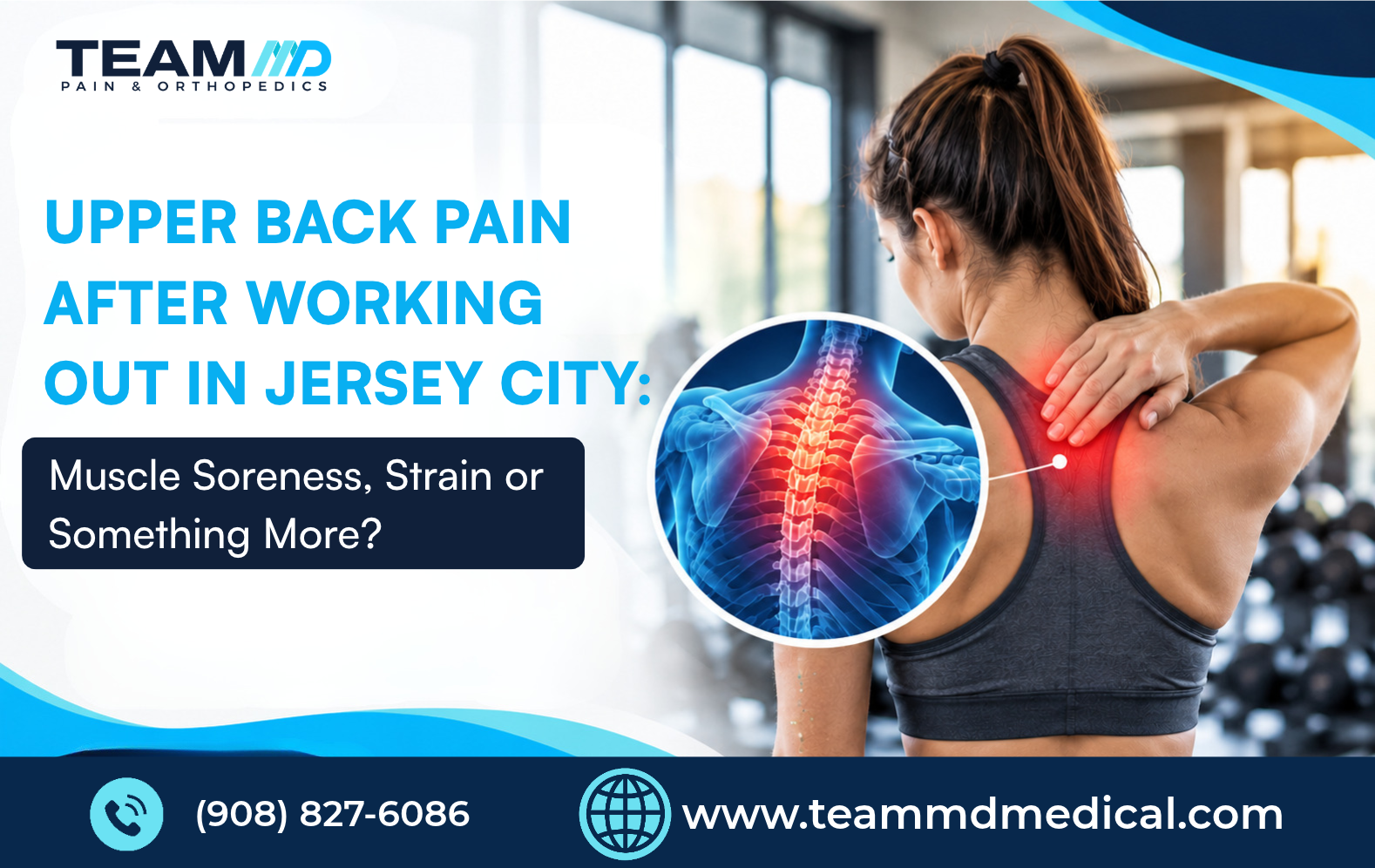
Aches between the shoulder blades following exercise can be a very inconvenient and aggravating sensation, particularly when it becomes a hindrance to daily activities. Exercises that involve the upper back muscles include overhead exercises, rowing, pull-ups, and weight lifting exercises. Post-workout pain is normal, but if there is pain that is persistent or different from the norm, there may be an injury that requires treatment. Delayed-onset muscle soreness (DOMS) and muscle strains are common causes of exercise-related upper back pain. However, discomfort that persists, limits movement, or causes tingling and numbness may indicate an underlying spinal or nerve condition. Knowing the symptoms and recovery times for various pain patterns and warning signals can give you a clue as to when it is safe to rest and when to call for medical help for upper back pain. If symptoms interfere with your activities or fail to improve, a back pain doctor in Jersey City can identify possible causes and recommend appropriate care.
Why Does Your Upper Back Hurt After Working Out?

Muscles, joints, ligaments, and connective tissues in your upper back provide support for your spine during exercise. These structures combine to stabilize your shoulder, hold you up, and regulate your motion. Understanding the frequent causes of upper back pain can help you recognize when discomfort reflects normal recovery or a possible injury.
Muscle Overuse and Delayed-Onset Muscle Soreness (DOMS)
DOMS typically happens when new activities are introduced, exercise level is raised, or muscles are exercised more than they are used to. Slow eccentric movements of the muscle, such as lowering your body from a pull-up, put a lot of stress on the muscle fibers. This temporary treatment can cause tenderness, stiffness, and aching following exercise. Healing will bring a reduction of symptoms, but continuous exercise on exhausted muscles without sufficient rest can cause a delay in symptom resolution.
Poor Exercise Form and Heavy Weightlifting
A poor lift can cause a high strain on the upper muscles of your spine. Rounded shoulders in rows, uncoordinated deadlifts, and bad overhead pressing technique can place more stress on the tissues. Lifting weights that exceed your current strength or making sudden, forceful movements can further increase injury risk. If discomfort repeatedly develops during specific exercises, a sports medicine evaluation in Jersey City may help identify contributing movement problems or injuries.
Muscle Imbalances and Inadequate Recovery
Poor shoulder blade stability, limited thoracic mobility, and tight chest muscles can disrupt movement patterns. These imbalances could cause some muscles to “take up the slack” during intense workouts. Lack of sleep, lack of recovery periods, and repeated training without recovery can lead to repeated soreness. Balanced strengthening and Physical therapy for back pain may help address movement limitations and improve muscular stability.
Muscle Soreness vs. Upper Back Strain: How Can You Tell the Difference?
Muscle strains and soreness can cause similar pain, but they may have a different time of onset, level of pain, and limitation of motion. It is important to understand these differences to identify whether your symptoms are normal muscle changes or may be a sign of injury that needs to be assessed.
Normal Muscle Soreness (DOMS): Symptoms and Recovery Time
The symptoms of DOMS are typically widespread and include aching, tenderness, tightness, and stiffness between the shoulder blades. Symptoms usually come on 12 to 48 hours after unaccustomed or intense exercise, and they are likely to be most severe 24 to 72 hours after exercise. The muscles may be tight when stretched and may feel tight when contracted, but gentle movement can help relieve the stiffness. Most symptoms go away in a few days, but the pain may last for five to seven days.
Upper Back Muscle Strain: Symptoms and Recovery Time
An upper back muscle strain is the result of over-stretching or damage to the muscles of the upper back. Some symptoms include localized aching, sharp pain, burning, muscle spasms, or uncomfortable knots. You may suddenly get pain during exercise, or pain may develop following repeated overloading. The affected area may be aggravated by twisting, reaching overhead, turning the head and coughing. Although recovery may take several weeks, mild strains may improve within days. ys, although complete healing can require several weeks.
Key Differences Between DOMS and Muscle Strain
Often, timing and location of discomfort will help a great deal. DOMS can build up over time and involve a larger muscle group, whereas strains usually only affect one muscle and cause pain during or after a certain movement. Normal soreness should steadily improve. Sharp pain, persistent spasms, or significant movement restrictions may indicate an injury that requires professional upper back pain treatment rather than continued self-management.
When Is Upper Back Pain After Exercise a Sign of Something More Serious?

Muscle soreness is a common explanation for post-workout discomfort, but some symptoms originate in the spine, nerves, shoulders, or other structures. Pain that behaves differently from ordinary exercise soreness deserves closer attention, particularly when it persists or occurs alongside unusual symptoms.
Thoracic Spine Problems and Herniated Discs
Your upper and middle back sit on the thoracic spine, which provides support and controlled movement. Joint irritation, degenerative changes, or herniated discs can sometimes cause persistent pain and restricted mobility. While rare, thoracic disc herniation can cause irritation of adjacent nerves or the structures of the spine. Ongoing discomfort, significant stiffness, or neurological symptoms may warrant evaluation by an orthopedic specialist in Jersey City.
Pinched Nerves and Radiating Pain
Burning, tingling, numbness, weakness, or pain that radiates towards the shoulders and arm(s) may result from nerve irritation. Paresthesias radiating towards the shoulder blades are common with cervical nerve involvement, and towards the rib cage with thoracic nerve involvement. One possible cause is radiculopathy, which occurs when a spinal nerve root becomes irritated or compressed. A pain specialist in Jersey City can evaluate these symptoms and determine whether nerve involvement is contributing to your discomfort.
Shoulder and Rib-Related Injuries
Upper back muscle pain can be confused with problems of the shoulder joint, rotator cuff injuries, and rib joint irritation. Depending on the structure involved, discomfort may be increased with overhead motion, shoulder motion, and/or deep breathing.
Because these conditions can produce overlapping symptoms, identifying the actual source of pain is essential. Appropriate Orthopedic care for persistent back pain begins with understanding which joints, muscles, or supporting tissues are involved.
Referred Pain From Internal Organs
It’s not always the muscles or spine that cause discomfort in the upper back. Sometimes, gallbladder issues can result in pain in the vicinity of the right shoulder blade, especially if there is upper abdominal pain, nausea, or discomfort after eating. Certain heart and lung conditions can also produce upper back pain. Discomfort accompanied by chest pressure, breathing difficulties, or other concerning symptoms requires immediate medical attention rather than home treatment.
Warning Signs: When Should You See a Doctor for Upper Back Pain?
Normal post-workout soreness should gradually improve as your muscles recover. Pain that becomes severe, spreads unexpectedly, or affects strength and sensation may indicate an underlying problem. Knowing the warning signals can help you know whether routine evaluation, urgent evaluation, or emergency care is needed.
Sudden or Sharp Pain During Exercise
Sharp, stabbing, or catching pain during lifting may indicate an acute muscle strain, joint injury, or another musculoskeletal problem. Continuing the same movement can aggravate an already injured area. Stop the exercise and avoid movements that reproduce significant pain. If symptoms are severe, restrict normal activities, or cause noticeable loss of function, consult a back pain doctor in Jersey City for further evaluation.
Pain That Radiates to the Chest, Shoulders, or Arms
If the pain radiates from the upper back into the shoulders or arms, it could signify nerve irritation, especially if it’s accompanied by a burning, tingling, or numb sensation. But radiating pain shouldn’t necessarily be a sign of a workout injury. Chest pressure or discomfort accompanied by breathlessness, sweating, dizziness, or faintness may indicate a medical emergency. Call 911 immediately if these symptoms occur, especially when a heart-related condition is possible.
Significant Weakness, Numbness, or Breathing Difficulties
If there is any progressive arm weakness, large sensory changes, or problems controlling normal movements, it means that there is a significant amount of nerve involvement. These symptoms should be immediately assessed by a medical professional, especially if they occur out of nowhere.
If there are any sudden changes in neurologic function or if there is significant difficulty breathing, this is an emergency. When these warning signs are present, no amount of stretching, massage, or rest is to be considered a substitute for adequate medical assessment.
Upper Back Pain That Persists Beyond 1–2 Weeks
If the upper back pain persists for a week or two, comes and goes, or gets worse when you’re less active, it should be evaluated. If the pain is ongoing, it doesn’t mean there is a significant problem, but it does mean that attention needs to be paid to the delayed recovery. A pain management doctor in Jersey City can review your symptoms, examine affected structures, and recommend suitable care. Professional pain management services in Jersey City may help address persistent muscular, joint, or nerve-related discomfort.
How Can You Relieve Upper Back Pain After Working Out?
Most muscle soreness and uncomplicated strains will benefit from conservative self-care. Which recovery is best will vary based on the cause, severity, and progression of symptoms. Temporary changes to workouts and gentle movement will help to heal without compromising daily activities.
Rest and Modify Your Workout Routine
Limit strenuous activities and activities that cause sudden pain or irritate the affected area temporarily. Give overworked muscles and other tissues a break before starting intense exercise again. As long as the symptoms are not too severe, it’s safe to continue with activities like walking and gentle shoulder movements. Be careful not to spend too much time in inactive positions because this can lead to stiffness and cause discomfort upon returning to normal movement.
Use Ice, Heat, and Gentle Mobility Exercises
Cold packs can help prevent swelling after an acute muscle injury, and warm packs can help loosen stiffness and make it more comfortable. Put a towel between the pack and your skin and use the pack for no longer than 15-20 minutes at a time. Some mobility exercises to help may include comfortable shoulder rolls, gentle shoulder blade movements, and controlled thoracic (mid-back) rotation. Avoid forcing stretches or performing movements that increase sharp pain.
Know When Home Remedies Are Not Enough
If the pain continues, becomes more severe, occurs more often, or causes neurological symptoms, it may be necessary to seek further treatment. Exercising through them can make an underlying injury worse, or make getting better take longer. A pain specialist in Jersey City can assess ongoing discomfort and recommend suitable treatment. Patients can also explore non-surgical back pain treatment options in Jersey City to understand how conservative care may support recovery.
What Are the Treatment Options for Persistent Upper Back Pain in Jersey City?
Persistent upper back pain requires treatment matched to its underlying cause. Various treatments might be effective for muscle strains, spinal joint issues, or nerve irritation. Conservative care is the initial option, and advanced procedures are reserved for certain conditions that are recognized through clinical evaluation.
Physical Therapy for Back Pain and Muscle Recovery
Physical therapy for back pain can assist in enhancing flexibility, control of motion, and muscular strength and power, while improving mobility. Thoracic mobility exercises, postural training, strengthening of the shoulder blades, and gradual strengthening are all part of a rehab program. A structured treatment plan can address movement limitations while supporting recovery and reducing the likelihood of recurring discomfort. TeamMD provides physical therapy in Jersey City to help patients improve functional movement and return to everyday activities.
Non-Surgical Pain Management in Jersey City
A pain management doctor in Jersey City evaluates your symptoms, medical history, physical limitations, and potential sources of discomfort. Treatment recommendations are based on clinical findings and the effect pain has on daily function. Personalized care may include therapeutic exercises, appropriate medications, activity adjustments, and coordinated rehabilitation. Effective pain management in Jersey City focuses on improving comfort, restoring movement, and addressing identified causes of persistent pain.
Advanced Treatment for Persistent Spine and Nerve Pain
Certain diagnosed spinal or nerve conditions may benefit from targeted procedures, including nerve blocks and epidural injections. Radiofrequency ablation may also be considered for selected chronic spinal pain conditions when clinical findings support its use. A pain specialist in Jersey City can determine whether an intervention is appropriate after reviewing your symptoms and examination findings. These treatments are intended for specific diagnosed conditions and are not routinely recommended for ordinary post-workout soreness.
Orthopedic Care for Persistent Back Pain
An orthopedic specialist in Jersey City may examine patients who have problems with their joints that don’t go away, or if they have any structural problems that are not cleared up by a non-surgical approach. An examination can identify if imaging, rehabilitation, or other treatment is needed. TeamMD provides orthopedic care in Jersey City for musculoskeletal and spine-related conditions. Treatment may include conservative management, coordinated rehabilitation, or further specialist evaluation depending on the diagnosis.
How Can You Prevent Upper Back Pain During Future Workouts?

The first step to preventing future upper back pain is to develop correct movement patterns, targeted strengthening, and smart progression. If you’re being physically active, allowing your body to adjust to the exercise can lessen the amount of stress on the muscles and make it easier for you to work out on a regular basis.
Improve Your Lifting Technique and Posture
Keep the spine stable while performing strength exercises like deadlifts, rows, overhead presses, and more. Select lighter weights so that the movements can be made without excessive twisting, shrugging, and compensatory muscle activity. If discomfort consistently appears during a particular exercise, review your technique with a qualified trainer or physical therapist. Small changes in movement mechanics or exercise selection may reduce unnecessary stress on your upper back.
Strengthen Your Upper Back and Core Muscles
Improved stability throughout exercise thanks to strong muscles around the shoulder blades, upper spine and core. Muscular endurance and co-ordination can be enhanced using controlled rows, resistance band pull-aparts and correctly progressed core movement. Physical therapy for back pain can help identify specific weaknesses, mobility restrictions, or movement patterns that contribute to discomfort. A personalized strengthening program may support better exercise performance while reducing repeated strain.
Increase Workout Intensity Gradually
Muscles can become overloaded before they have a chance to adapt by lifting too much, doing too many reps, or training too much. Increase training demands slowly and don’t increase multiple demands at once. Allow proper rest/recovery between tough sessions, particularly when new activities are introduced. This gradual progression enables the muscles and supporting tissues to adjust to the exercise and to lessen the chances of over-soreness or injury.
Recognize Early Signs of Muscle Overload
Any unusual fatigue, poor performance, frequent tightness, and poor exercise technique can be signs of an excessive amount of training stress. These changes are often the first signs that things are going wrong before it becomes a problem. Modify exercise intensity, decrease aggravating movements, and add rest as needed. Identifying early signs can help you sustain your training and not constantly overworking the same muscles.
How TeamMD Helps Patients Manage Upper Back Pain in Jersey City

At TeamMD, we understand how exercise-related upper back pain can interfere with workouts, professional responsibilities, and everyday movement. Our patient-focused approach combines clinical assessment, individualized pain management, and rehabilitation to help patients understand their symptoms and work toward lasting functional improvement.
We Identify the Underlying Cause of Your Upper Back Pain
Our specialists begin by reviewing your symptoms, medical history, exercise habits, and physical limitations. We examine movement patterns and evaluate potential muscular, joint, nerve, and spinal causes of discomfort. If you are seeking a back pain doctor in Jersey City, our team can help determine whether your symptoms reflect muscle strain, nerve irritation, or another musculoskeletal condition. Clinical findings guide appropriate treatment recommendations and any necessary further evaluation.
We Provide Personalized Non-Surgical Pain Management
We build unique therapy regimens depending on your diagnosis, activity level, symptoms, and recovery goals. Our approach prioritizes conservative treatments when appropriate, with minimally invasive procedures considered for selected conditions. A pain management doctor in Jersey City can explain suitable treatment options and help you understand the next steps. We focus on addressing identified sources of discomfort while improving movement, daily function, and overall physical comfort.
We Support Recovery Through Rehabilitation and Physical Therapy
Our Jersey City physical therapy services focus on improving strength, flexibility, joint mobility, and functional movement. Rehabilitation may include targeted exercises, movement retraining, and gradual progression toward activities that previously caused discomfort. Through physical therapy for back pain, we help patients address physical limitations and rebuild confidence in everyday movement. Our goal is to support a safe, practical return to exercise while reducing factors that contribute to recurring symptoms.
We Help You Take the Next Step Toward Comfortable Movement
Living with recurring upper back pain can make even familiar activities feel uncertain. Our team helps patients understand possible causes, review treatment options, and choose an appropriate path toward recovery. When necessary, we coordinate further assessment or Orthopedic care for persistent back pain. If your symptoms continue despite rest and activity adjustments, schedule a consultation with our Jersey City team to discuss your condition and receive personalized treatment recommendations.
Conclusion
Upper back pain after exercise often develops from delayed-onset muscle soreness or muscle strain. DOMS typically improves within several days, while strains may require several weeks to heal, depending on their severity. Understanding symptom patterns can help you distinguish normal recovery from discomfort that requires medical attention. Persistent pain, restricted movement, or radiating symptoms deserve professional evaluation. Severe chest discomfort, breathing difficulties, and sudden neurological changes require immediate emergency care. If ongoing upper back discomfort is affecting your workouts or daily activities, TeamMD offers personalized pain management in Jersey City to help identify the cause and recommend appropriate treatment. Schedule a consultation with TeamMD in Jersey City to discuss your symptoms, explore treatment options, and take the next step toward comfortable, confident movement.