
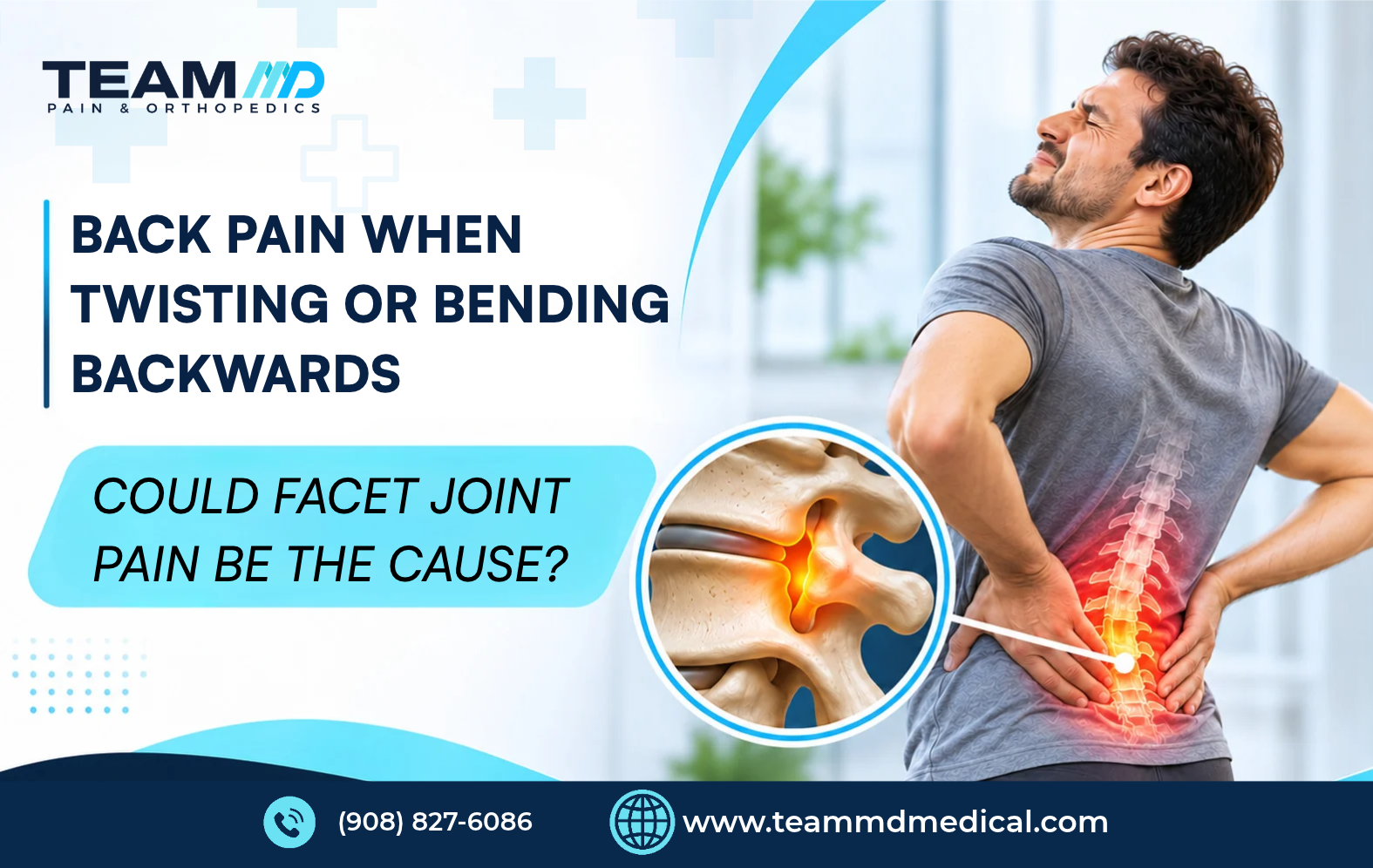
You turn to grab something from the back seat, stand up after sitting for a while, or lean backward to reach a shelf. Then your lower back catches. It may settle quickly, or it may keep happening until you start planning ordinary movements around the pain. One possible explanation is irritation of the facet joints, the small joints at the back of your spine. But discs, muscles, and nerves can cause similar pain. Knowing what the symptoms might mean can help you decide when to see a back pain specialist Easton residents can consult.
Quick Answer: Can Facet Joint Pain Cause Back Pain When Twisting?
Yes. Twisting and bending backward can increase pressure on the facet joints, making irritated or arthritic joints painful. You might notice an ache beside your spine, stiffness, or discomfort in your buttocks or upper thighs. These clues are useful, but they cannot confirm facet joint pain without an evaluation.
What Is Facet Joint Pain, and Why Does It Happen?

Facet joints support your spine while letting it move. When irritated, they can make ordinary bending and turning painful.
Understanding the Role of Facet Joints in Your Spine
Two facet joints connect neighboring vertebrae at each spinal level, one on either side. Along with discs and muscles, they guide bending and rotation while limiting excessive movement.
Why Does Bending Backward Cause Facet Joint Pain?
Leaning backward loads the facet joints as the bones move closer together. When a joint is already irritated, straightening up, reaching overhead, or arching your back may bring on pain.
Why Does Twisting Your Back Trigger Pain?
Twisting stresses the joint surfaces and their capsules, especially when lifting or playing sports. A pain management specialist Easton patients consult can assess whether that motion points to the joints or another cause.
Common Causes of Facet Joint Inflammation
Arthritis, past injuries, and repeated strain can contribute to facet pain. But joint changes on a scan do not always cause symptoms. Other sources of low back pain also deserve consideration.
What Are the Common Symptoms of Facet Joint Pain?
Facet pain doesn’t feel the same for everyone. Pain patterns and triggers matter during pain management evaluations.
Lower Back Pain on One Side or Near the Spine
Pain may feel like a dull, deep ache beside the spine or a sharp catch during movement. It can affect one side or both, sometimes with tenderness in nearby muscles.
Pain That Extends to the Upper Thighs, Hips, or Buttocks
Facet pain may spread to the buttocks, hips, or upper thighs rather than staying in one spot. Doctors call this referred pain. It usually stops above the knee, but location alone cannot confirm the cause.
Pain That Worsens With Standing, Twisting, or Arching Backward
Standing for long periods, twisting, or leaning backward may trigger discomfort; sitting or leaning forward may ease it. Spinal stenosis can behave similarly, so movement patterns alone are not a diagnosis.
Back Stiffness and Reduced Mobility
Stiffness after waking or a long drive may make gardening, lifting, and exercise harder than usual. A pain management doctor Easton patients visit can assess recurring limitations and spine care needs.
Facet Joint Pain vs. Herniated Disc Pain: How Can You Tell the Difference?

Facet joints and discs sit close together, so their symptoms overlap. One painful movement rarely tells the whole story.
How Facet Joint Pain and Disc Pain Differ
Facet pain often worsens with extension or twisting, while herniated disc problems may worsen with sitting or forward bending. Neither pattern is a test on its own, and both conditions can coexist.
Is Pain Going Down Your Leg a Sign of Sciatica?
Pain running down the leg with tingling, numbness, or weakness may point to nerve irritation rather than facet-related referred pain. A pain specialist Easton residents consult can assess for sciatica.
Other Conditions That Can Cause Similar Back Pain
Muscle strains, sacroiliac joint problems, and spinal stenosis can all cause pain during certain movements. A careful examination helps narrow these possibilities before you settle on a treatment plan.
How Is Facet Joint Pain Diagnosed?
No single movement or scan confirms facet joint pain. Doctors combine your symptoms, examination, and selected tests to investigate the cause.
Medical History and Physical Examination
Your physician will ask when pain began, which movements trigger it, and what you have tried. An examination of movement, tenderness, strength, and reflexes helps guide care but cannot confirm facet pain alone.
Can an MRI or X-Ray Show Facet Joint Problems?
X-rays can show bony arthritis, while MRI reveals discs, nerves, and nearby tissues. Neither scan proves which changes cause pain. Some people have visible arthritis and no symptoms at all.
What Is a Diagnostic Medial Branch Block?
A doctor uses local anesthetic near nerves serving the facet joints, then checks whether your usual pain briefly eases. The result helps guide treatment. Ask about nerve blocks when considering interventional pain management in Easton.
What Are the Best Non-Surgical Treatments for Facet Joint Pain?
Many people begin with non-surgical care. The best approach depends on your symptoms, earlier treatments, and other conditions.
Physical Therapy and Core Strengthening
A therapist may focus on core strength, flexibility, hip mobility, and the way you bend or lift. The goal is not to push through sharp pain, but to tailor physical therapy to your symptoms.
Posture Changes and Activity Modifications
You need not stop moving altogether. Small adjustments can reduce avoidable strain:
- Turn your feet rather than twisting sharply at the waist.
- Keep frequently used objects within comfortable reach.
- Change positions during prolonged sitting or standing.
- Avoid rotating your torso while lifting heavy objects.
Medications and Supportive Pain Relief
Your clinician may suggest acetaminophen or anti-inflammatory medication, along with heat or cold packs for short-term comfort. Ask before using over-the-counter painkillers if you have ulcers, kidney disease, or take other medicines.
Can Facet Joint Pain Improve Without Surgery?
Yes. Rehabilitation, sensible activity changes, and medication can help some people, although arthritis or another spinal condition may cause recurring episodes. A pain clinic Easton evaluation can clarify your options without assuming surgery is necessary.
When Are Minimally Invasive Treatments Considered for Facet Joint Pain?
Persistent pain may lead to targeted procedures after conservative care. These treatments depend on your diagnosis and response to earlier care.
Diagnostic Medial Branch Nerve Blocks
These injections temporarily numb small nerves carrying signals from the facet joints. Your doctor compares your usual pain with how you feel during the anesthetic’s effect to decide whether further treatment is worth considering.
Radiofrequency Ablation for Facet Joint Pain
Radiofrequency ablation uses controlled heat to interrupt pain signals from selected medial branch nerves. It may help after favorable diagnostic blocks, although the degree and duration of relief vary. It is among TeamMD’s pain management treatments.
Are Facet Joint Steroid Injections Effective?
Steroid injections deliver anti-inflammatory medication into a facet joint, rather than near its nerve supply. Some people feel temporary relief, but evidence for lasting benefit is limited. Discuss risks and realistic expectations with your physician.
When Should You See a Pain Specialist for Back Pain?

Brief pain may settle with time. But recurring problems affecting daily life warrant evaluation, especially if you’re searching for pain management near me in Easton.
Signs That Your Back Pain Needs Medical Evaluation
Seek care if pain keeps returning, interrupts work or sleep, or does not improve with reasonable self-care. Mention increasing stiffness, reduced mobility, and any new leg symptoms so your clinician understands the pattern.
Back Pain Warning Signs That Require Immediate Medical Attention
Some symptoms call for urgent medical care, not a routine pain appointment:
- New bladder or bowel problems or numbness around the groin.
- Progressive weakness in a leg.
- Severe pain after major trauma, or back pain with fever.
What to Expect During Your First Pain Management Appointment
Bring your medication list, previous scans, and notes on what hurts or limits your daily routine. If you searched for a pain management doctor near me in Easton, learn about pain management care as a first step.
How We Help Patients Manage Facet Joint Pain at TeamMD

At TeamMD, we know back pain can disrupt work and everyday plans. We listen first, then assess what might help.
Our Personalized Approach to Back Pain Diagnosis
We listen to your history, examine how you move, and consider tests that may clarify the cause. We also look beyond facet arthritis, so our recommendations reflect your symptoms rather than assumptions.
Our Advanced Pain Management and Treatment Options
Our care may involve conservative treatment, nerve blocks, or radiofrequency ablation when appropriate. We discuss these options in the context of your symptoms, health, and goals, without promising the same outcome for everyone.
Our Pain Management Care in Easton, PA
We assess persistent back, joint, and nerve pain at our Easton pain management clinic and at our New Jersey locations in Clifton, Hillsborough, Jersey City, Metuchen, Somerset, and East Brunswick. Searching for a pain specialist near me in Easton? We can discuss your options.
Schedule a Back Pain Evaluation With Our Team
If bending or twisting keeps bringing on pain, let us know how it affects your day. We can assess your symptoms and discuss care that fits your needs.
Conclusion
Back pain when twisting or bending backward may be linked to irritated facet joints, but herniated discs, muscle strains, and nerve-related conditions can cause similar symptoms. Recognizing warning signs such as persistent stiffness, localized pain, or discomfort spreading into the hips and thighs can help you understand when medical attention is needed. A proper diagnosis, which may include a physical examination, imaging, or diagnostic nerve blocks, helps determine the source of pain. Depending on your condition, treatment may involve physical therapy, activity modifications, medication, or minimally invasive procedures such as radiofrequency ablation. If back discomfort limits your day-to-day activities, our pain management specialists at TeamMD in Easton, PA, can help identify the cause and discuss suitable treatment options. Schedule an appointment with TeamMD today to receive a personalized evaluation and take the next step toward improving your mobility and comfort.
Frequently Asked Questions About Facet Joint Pain
Movement, recovery, and treatment raise understandable questions. These answers offer guidance, not an individual diagnosis.
Can Facet Joint Pain Cause Sharp Pain When Twisting?
Yes, twisting can put extra pressure on irritated facet joints and cause sharp or aching pain. At TeamMD, we assess your symptoms and spinal movement to help identify the cause and recommend appropriate care.
Why Does My Lower Back Hurt When I Bend Backward but Not Forward?
Bending backward can increase pressure on irritated facet joints, causing pain that may ease when leaning forward. We evaluate your spine to identify possible causes and develop a treatment plan suited to your needs.
Does Facet Joint Pain Travel Down the Leg?
Facet joint pain may spread into the buttocks, hips, or upper thighs, while tingling or weakness may suggest nerve involvement. We assess your symptoms to distinguish referred pain from nerve-related conditions.
Is Walking Good for Facet Joint Pain?
Yes, walking can support mobility and muscle function as long as it does not worsen your symptoms. We help you find a comfortable activity level and recommend suitable rehabilitation options.
Can Facet Joint Arthritis Be Reversed?
No, existing arthritic changes generally cannot be reversed, but the associated pain can often be managed. We develop personalized treatment plans to help reduce discomfort and improve everyday movement.
How Long Does Facet Joint Pain Last?
Facet joint pain may improve within weeks or become recurring, depending on the underlying condition and treatment response. We assess your symptoms and recommend care based on your recovery needs and daily activities.