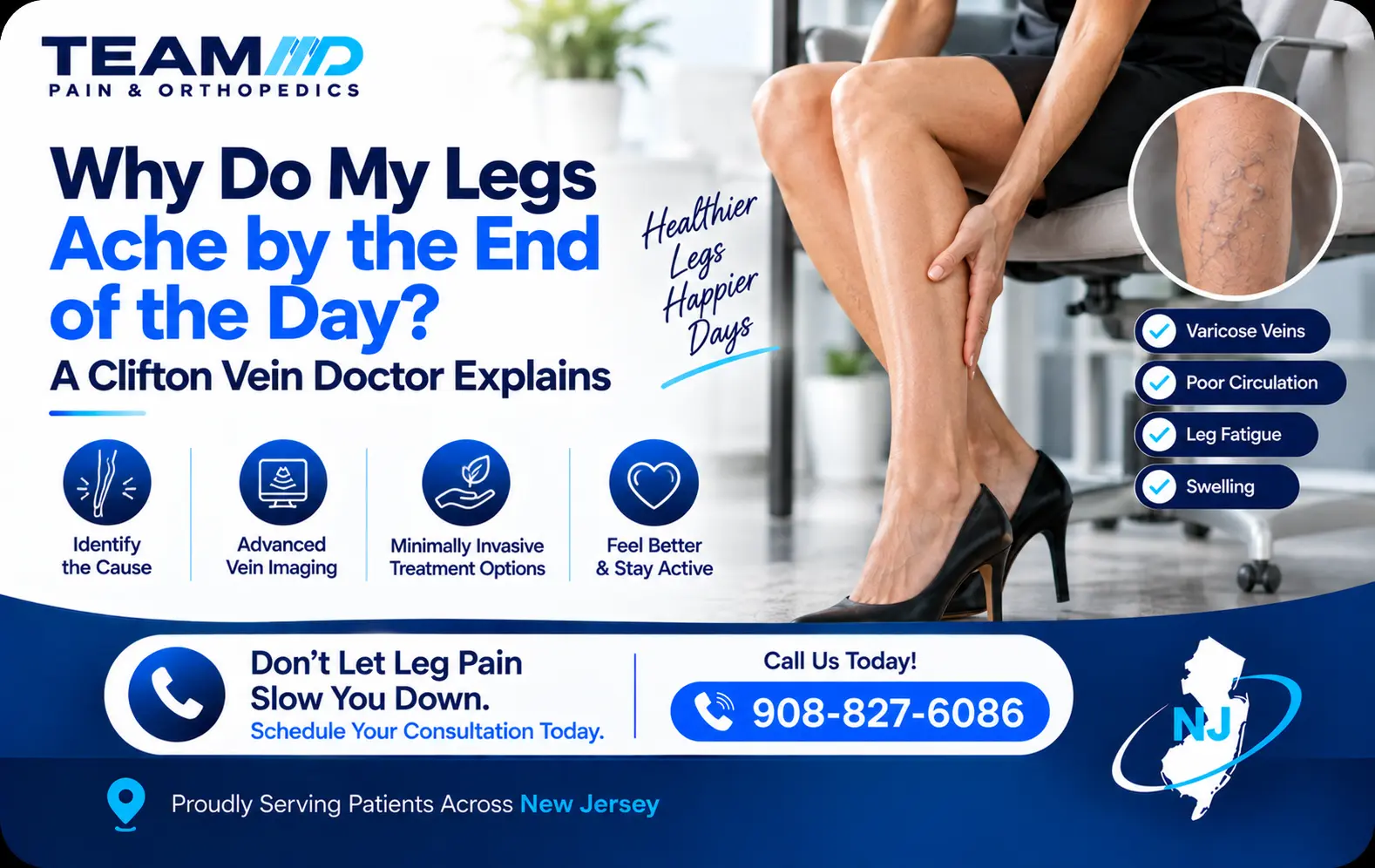
If your legs feel heavy, tired, achy, or swollen by the end of the day, it may be more than ordinary fatigue. Symptoms that repeatedly become worse after standing or being active and then improve after rest or elevation can be associated with problems with blood flow in the leg veins. One condition TeamMD evaluates and treats is chronic venous insufficiency (CVI), which can cause leg heaviness, swelling, discomfort, and other circulation-related symptoms.
That does not mean every aching leg is caused by a vein condition. The important question is whether the symptoms are persistent, recurring, or accompanied by other changes in your legs. A proper evaluation can help determine what is causing the discomfort and whether vein treatment is appropriate.
What Can Cause Legs to Ache by the End of the Day?
Your legs work against gravity all day to move blood back toward the heart. When the valves inside certain leg veins do not work efficiently, blood can collect in the lower legs instead of moving upward normally. This can contribute to venous pressure and symptoms such as heaviness, swelling, aching, and visible veins.
TeamMD’s Clifton vein care services focus on conditions including varicose veins, spider veins, chronic venous insufficiency, leg swelling and heaviness, and other circulation concerns.
If your legs repeatedly feel worse in the evening, especially after prolonged standing, and the problem keeps returning, it is reasonable to have the symptoms evaluated rather than assuming they are simply part of getting older or being on your feet.
Signs Your Leg Pain May Be Vein-Related
End-of-day leg discomfort can have several causes, but certain symptoms can make a vein-related problem more likely. Pay attention if you regularly experience:
- A heavy or tired feeling in your legs
- Aching or discomfort that increases later in the day
- Swelling around the lower legs or ankles
- Visible varicose veins or spider veins
- Skin changes around the lower legs or ankles
- Leg discomfort along with a feeling of pressure or fullness
- Symptoms that seem connected to long periods of standing or being active
You do not necessarily need large, bulging veins to have a vein problem. Some people notice heaviness, swelling, or aching before visible veins become a major concern. That is why an evaluation should focus on how the veins are functioning, not only on how they look.
When Should You See a Vein Specialist?
Consider scheduling a vein evaluation when leg heaviness, swelling, or aching is recurring and affecting your normal routine. It is especially worth discussing with a specialist when the symptoms are gradually becoming more noticeable or are accompanied by visible vein changes or skin changes.
A vein specialist can assess your symptoms, examine the legs, and determine whether further diagnostic testing is appropriate. TeamMD emphasizes identifying the underlying cause of vein symptoms and creating a treatment plan around the patient’s condition rather than using the same approach for everyone.
If you have been searching online for a Vein Specialist clinic near you, look beyond proximity alone. Consider whether the clinic evaluates the underlying vein problem, offers minimally invasive treatment options, explains the diagnosis clearly, and provides a treatment plan based on your individual needs.
What Vein Treatment Actually Involves
| Step | What Happens |
|---|---|
| Evaluation | Ultrasound imaging to assess vein function, not just appearance |
| Diagnosis | Identify which veins are affected and how severely |
| Treatment | Minimally invasive options such as radiofrequency or endovenous ablation |
| Recovery | Most patients return to normal activity within a day or two |
Vein treatment today is almost never the “vein stripping” surgery people remember from decades ago. Most procedures are outpatient, minimally invasive, and covered by insurance when medically necessary.
What Treatments Are Available for Aching Legs Caused by Vein Problems?
Treatment depends on the condition being treated, the veins involved, and the findings from your evaluation. TeamMD offers several minimally invasive vein treatment options.
Radiofrequency Vein Ablation
Radiofrequency ablation, or RFA, uses controlled heat energy to close a diseased vein. Blood can then redirect through healthier veins.
TeamMD describes RFA as an outpatient procedure performed with ultrasound guidance and local anesthesia. Its published procedure information states that treatment generally takes about 30 to 60 minutes, depending on the size and number of veins being treated.
Endovenous Vein Ablation
Endovenous vein ablation uses thermal energy to close a problematic vein from within. TeamMD’s procedure information describes ultrasound mapping before treatment, local anesthesia, and a small catheter used to treat the affected vein.
This approach is designed to treat affected veins without the large surgical incisions associated with traditional vein surgery.
Varithena
Varithena is an FDA-approved injectable foam used to treat varicose veins. The foam is injected into the affected vein, causing it to close so the body can gradually absorb it.
Whether Varithena or another treatment is appropriate depends on the patient’s vein condition and evaluation. TeamMD lists Varithena among its minimally invasive treatment options for varicose veins.
Chronic Venous Insufficiency Management
Not every patient needs a procedure. TeamMD also provides management for chronic venous insufficiency, which may include personalized treatment planning, compression therapy, and lifestyle guidance.
The appropriate approach depends on the severity and nature of the vein problem.
What Is Recovery Like After Minimally Invasive Vein Treatment?
One reason minimally invasive treatment is appealing to many patients is the shorter recovery compared with traditional surgical approaches.
TeamMD’s treatment information notes that many patients return to their normal routine within 24 to 48 hours after endovenous vein ablation, although recovery varies and some patients may experience temporary bruising, tenderness, swelling, warmth, or other minor symptoms.
Your actual recovery depends on the procedure performed and your individual condition. Your care team should provide specific instructions about activity, follow-up, and what to expect after treatment.
Does Vein Treatment Have to Be Surgery?
Not necessarily.
Modern vein care includes several minimally invasive options that can be performed without the large incisions associated with traditional vein stripping. RFA, endovenous vein ablation, and injectable foam treatment are examples of procedures used to address specific vein conditions.
The goal is not simply to remove a visible vein. When symptoms are caused by an underlying vein problem, treatment is planned to address the affected veins and improve circulation while considering the patient’s overall condition.
Why Choose TeamMD for Vein Care in Clifton?
TeamMD’s Clifton location provides vein care for patients dealing with varicose veins, spider veins, chronic venous insufficiency, leg swelling, heaviness, and circulation concerns. The practice describes its approach as personalized, minimally invasive, and focused on improving comfort and circulation.
TeamMD also provides insurance verification and lists major insurance plans among those accepted at its locations. Coverage for a particular vein procedure depends on the patient’s plan and whether the treatment meets the plan’s medical-necessity requirements.
Frequently Asked Questions
Why do my legs hurt more at night or at the end of the day?
Leg heaviness and aching that increase throughout the day can occur with vein conditions such as chronic venous insufficiency. However, leg pain has many possible causes, so recurring symptoms should be evaluated rather than automatically attributed to vein disease.
Can you have vein problems without varicose veins?
Yes. Vein-related symptoms can include heaviness, swelling, or discomfort even when large visible varicose veins are not present. An evaluation can help determine whether an underlying circulation problem is contributing to the symptoms.
What is the difference between spider veins and varicose veins?
Spider veins are smaller, visible veins near the skin’s surface, while varicose veins are larger and typically more prominent. They can have different treatment needs, so a specialist can determine which approach is appropriate.
Is vein treatment painful?
Many minimally invasive vein procedures are performed with local anesthesia. TeamMD’s procedure information notes that patients may experience pressure or warmth during radiofrequency ablation, while minor tenderness or bruising can occur afterward.
Does insurance cover vein treatment?
Coverage varies by insurance plan and the reason for treatment. TeamMD notes that coverage depends on the specific plan and offers insurance verification to help patients understand their benefits before treatment.
The Bottom Line
Legs that ache at the end of the day are not always a sign of vein disease, but recurring heaviness, swelling, discomfort, or visible vein changes deserve attention. Chronic venous insufficiency and other vein conditions can affect circulation and may be treatable with personalized, minimally invasive care.
If your legs regularly feel heavy or painful by evening, consider scheduling a vein evaluation at TeamMD’s Clifton location. Call us or request an appointment to discuss your symptoms and treatment options.