
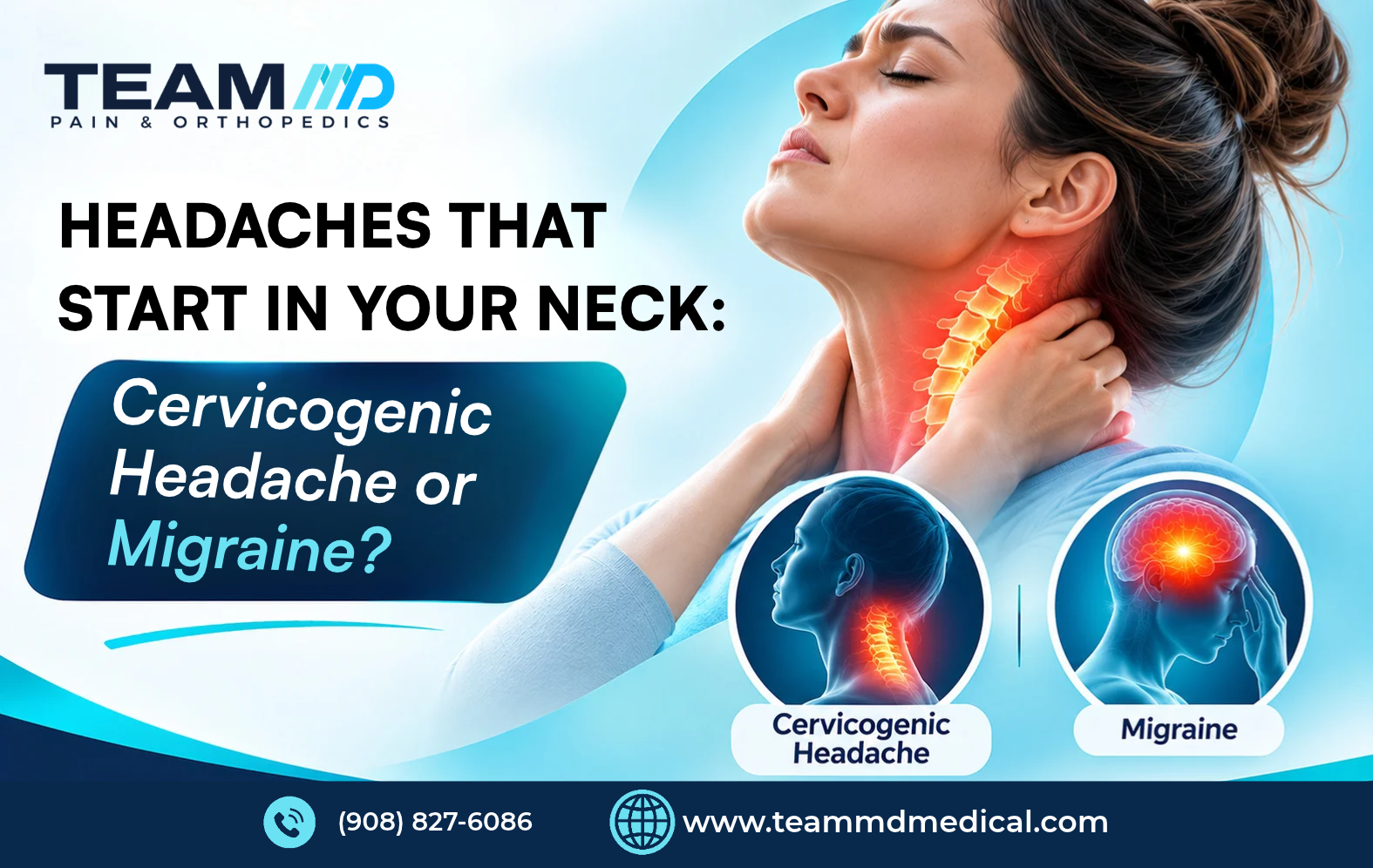
A pounding headache does not automatically mean migraine, and pain at the base of the skull is not always a simple muscle strain. A headache that starts in the neck may come from structures in the cervical spine, but migraine can also cause neck stiffness. That overlap makes it difficult to decide whether you are dealing with a cervicogenic headache or migraine without an evaluation. Understanding the difference matters because the treatments are not interchangeable. A search for pain management doctors in New Jersey may bring up many clinics. Look for one that considers both headache patterns and neck function rather than relying on pain location alone.
Defining the Two Headaches: Core Anatomical Differences

Cervicogenic Headache: Pain Referred From the Neck
A cervicogenic headache is a secondary headache, meaning another condition produces the pain. Irritation from joints, discs, ligaments, or other tissues in the upper cervical spine, particularly around C1-C3, can be felt in the back or front of the head. This is called referred pain. Typical cervicogenic headache symptoms include pain that seems to travel forward from the upper neck, restricted neck movement, and worsening discomfort when certain movements or positions provoke the affected area. Pain is commonly one-sided, though this feature is not exclusive to the condition. Neck pain and headache may occur together, but neck pain by itself does not prove a cervicogenic cause.
Migraine: A Primary Neurological Disorder
Migraine is a neurological condition involving altered pain processing and neural pathways. Attacks may involve throbbing or pressing head pain, nausea, sensitivity to light or sound, and sometimes visual or sensory aura. Genetics, hormones, sleep changes, and other factors can influence susceptibility. A migraine may begin with neck discomfort, which is one reason it gets confused with a neck-driven headache. The American Migraine Foundation explains that neck pain can be part of the migraine process itself, rather than evidence that a neck disorder caused the attack.
Quick Self-Assessment: Could Your Headache Be Coming From Your Neck?
Use these observations to prepare for a consultation, not to diagnose yourself:
- The pain often starts at the base of my skull and travels toward my forehead or behind an eye.
- It usually affects the same side of my head.
- Turning my head or holding one position seems to bring on my familiar headache.
- My upper neck feels stiff, and turning it is more difficult than usual.
- The head pain sometimes accompanies tenderness around my upper neck.
- My usual headache medication has not worked as expected.
- I have a history of whiplash, neck injury, or long periods of uncomfortable desk posture.
If a headache that starts in the neck repeatedly follows the same pattern, describe it to your clinician. Migraine and other conditions can produce some of these signs too. Avoid forcefully pressing or twisting your neck to test yourself.
Common Causes and Triggers

Possible Cervical Sources
A past whiplash injury, an irritated upper cervical joint, or another condition affecting the neck may contribute to referred head pain. Degenerative changes and some cervical disc disorders can be relevant, although an abnormal scan does not automatically identify the pain source. Prolonged desk work may aggravate neck pain and headache without necessarily causing a true cervicogenic headache. TeamMD’s headache and migraine care describes the different headache patterns it evaluates, including those associated with cervical spine problems.
Migraine Triggers
Migraine susceptibility can be influenced by irregular sleep, stress, hormonal changes, missed meals, shifts in caffeine use, and other individual triggers. A headache diary can reveal patterns, particularly when symptoms occur together with nausea or light sensitivity. Trigger patterns vary widely, and a single food or posture is rarely the explanation for every attack.
Can You Have Both Cervicogenic Headache and Migraine?
Yes. A person can have migraine and a separate cervical pain problem. Neck discomfort may also be a migraine symptom, rather than evidence of a second headache condition. Sometimes a painful neck episode accompanies an attack, making it challenging to identify which process is responsible. That is why some patients cannot be accurately described by one headache label. A clinician may need to evaluate both, especially when typical migraine symptoms occur alongside pain that is reliably provoked by neck movement.
How Are These Headaches Diagnosed and Treated?
A clinician asks about headache frequency, duration, one-sided pain, aura, nausea, medications, injuries, and the role of neck movement. A neurological examination and careful assessment of cervical range of motion help distinguish patterns. Imaging may be appropriate for selected patients, but degenerative neck findings alone do not prove that the neck causes the headache. Tracking cervicogenic headache symptoms in a diary, including whether neck movement reproduces the pain, can support the examination. If your search for pain management doctors New Jersey brings up several options, ask how each practice distinguishes referred neck pain from migraine and when it recommends neurological referral.
Treatment Depends on the Diagnosis
Cervicogenic headache treatment commonly starts with a personalized plan that may include physical therapy, gradual neck-strengthening exercises, mobility work, posture changes, and appropriate pain management. You can review TeamMD’s pain treatment services to learn about its broader approach. For carefully selected patients, diagnostic cervical nerve or joint blocks can help confirm a suspected source. If a specific pain-generating joint is identified, radiofrequency ablation may be considered; neither procedure is automatically suitable for every headache. Migraine treatment follows a different pathway. It may include migraine-specific acute medications, preventive therapies, sleep and trigger management, or specialist care. Those treatments are important when migraine is the diagnosis, even if neck pain accompanies attacks. When searching for pain management doctors New Jersey, focus on evaluation and individualized treatment rather than a promised cure.
When Is a Headache an Emergency?
Seek emergency care for a sudden, severe headache that peaks within a minute, or for a headache with new weakness, confusion, trouble speaking, major vision changes, fever, or marked neck stiffness. New or rapidly worsening headaches after injury also need urgent assessment. These symptoms should not wait for a routine pain-management appointment. For recurring headaches that are changing, becoming more frequent, or disrupting daily life, schedule a timely medical evaluation even without emergency signs.
Why Choose TeamMD for Headache and Neck Pain Care?
Assessment Before Selecting Treatment
At TeamMD Medical, we review your headache history, neck symptoms, examination findings, and everyday limitations before recommending care. We do not assume that every headache linked to the neck has the same source. Patients with neck pain and headache may need different care depending on whether a cervical disorder, migraine, or both are involved.
Multidisciplinary, Conservative-First Care
Our pain management team offers individualized treatment planning and access to specialists across pain and spine care. We consider conservative measures when appropriate and coordinate further evaluation or referrals based on the diagnosis. You can learn about our pain management approach and discuss suitable next steps with our team.
Targeted Procedures When Indicated
When symptoms and examination findings suggest a particular nerve or joint source, some patients may benefit from carefully selected diagnostic or therapeutic injections. TeamMD discusses nerve block procedures and radiofrequency ablation among its pain treatment options. Image guidance can support needle placement, but no procedure guarantees permanent relief. A suitable cervicogenic headache treatment plan should account for your diagnosis, preferences, medical history, and response to earlier care. Treatment for migraine may require a different specialist pathway.
Conclusion
A headache that starts in the neck may reflect cervical referred pain, but migraine can also produce neck symptoms. The distinction between cervicogenic headache or migraine depends on patterns, examination findings, and evidence of the underlying cause, not a single symptom. Matching care to the diagnosis is the most useful next step. Cervicogenic headache treatment should be tailored to the individual rather than applied to every headache with neck discomfort. Contact us to book an appointment with TeamMD Medical and discuss your recurring head and neck pain. Our team can help you explore an appropriate evaluation and available care options.